How to Choose the Best Hybrid Inverter 5kW?
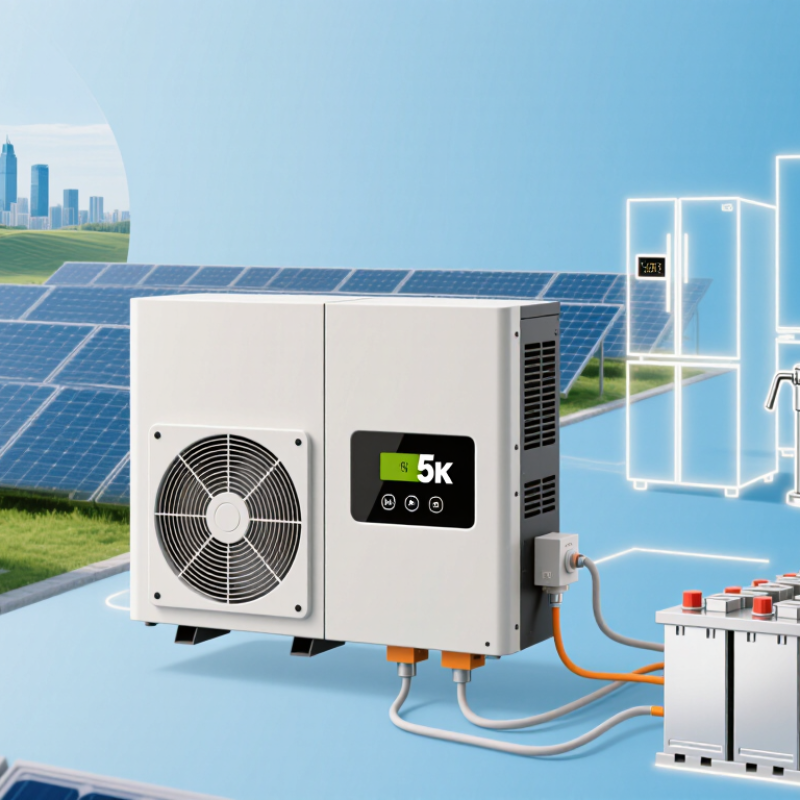
Choosing the right Hybrid Inverter 5kw is not simply a matter of comparing prices. It is a practical decision about energy security, battery performance, and daily power use. A suitable model should match your solar array, battery chemistry, household loads, and local grid requirements.
Steven J. Strong, a respected renewable-energy engineer and author, once described the inverter as “the heart of the solar-electric system.” That image is useful. The inverter sits between rooftop panels, batteries, appliances, and the utility grid. When it operates well, the transition feels invisible. When it is poorly selected, lights may flicker, batteries may charge slowly, or backup power may fail during a storm.
A careful evaluation starts with real measurements. Record the refrigerator’s starting surge, the pump’s running demand, and your evening electricity use. A 5kW label may not reveal the unit’s short-term surge capacity. Battery voltage, usable capacity, MPPT range, conversion efficiency, and cooling design also deserve attention. Certification and installer support matter too.
Do not trust impressive numbers alone.
The “best” inverter depends on the property. A rural home may value generator compatibility and strong backup control. An urban household may prefer quiet operation, compact installation, and simple monitoring. Some specifications remain unclear in product brochures. That deserves skepticism. Even experienced buyers can overlook standby consumption or warranty conditions.
This guide examines the details that influence long-term performance. It also considers installation quality, safety, maintenance, and honest limitations. A dependable Hybrid Inverter 5kw should fit your energy habits, not merely look powerful on paper.
Define Your Energy Needs and Solar System Requirements
How to Choose the Best Hybrid Inverter 5kW?
Define Your Energy Needs and Solar System Requirements
A 5kW hybrid inverter should match your real electricity profile, not an assumed household average. Record appliance wattage and daily running hours for at least seven days. Note the refrigerator startup surge, water pump cycles, cooking loads, and nighttime consumption. A 5kW rating describes output capacity, not guaranteed battery endurance. It may support several essential circuits, but not every appliance simultaneously.
The International Energy Agency Photovoltaic Systems Programme reported over 400GW of new solar capacity in 2023. This growth makes accurate system sizing more important. Estimate your daily energy demand in kilowatt-hours, then separate essential and flexible loads. During an outage, lighting, refrigeration, communications, and medical equipment may deserve priority. A 5kW inverter could be excessive for a low-use home, yet inadequate for electric heating.
Check the solar input range, maximum PV current, battery voltage, and backup transfer time. The National Renewable Energy Laboratory notes that local solar output varies with weather, orientation, shading, and temperature. A 5kW inverter does not require exactly 5kW of panels. However, oversizing the array beyond permitted limits can create clipping or protection issues. Battery capacity should reflect evening demand and backup hours, not marketing claims. I would revise the design after reviewing one winter bill. Seasonal behavior often exposes weak assumptions. Safety clearances and local electrical rules still control the final installation.
Compare Hybrid Inverter Power Ratings and Battery Compatibility
How to Choose the Best Hybrid Inverter 5kW?
A 5kW label can mislead. It usually describes maximum continuous AC output, not battery capacity or solar input. Compare continuous power, surge power, MPPT voltage range, and charging limits together. A household may need 5kW for pumps, refrigerators, and computers, but not continuously. The U.S. National Renewable Energy Laboratory’s 2024 Annual Technology Baseline uses about 85% round-trip efficiency for lithium-ion storage systems. Real installations can perform differently because of temperature, wiring, and standby losses.
Battery compatibility deserves closer attention. Check the inverter’s supported battery voltage, chemistry, maximum charge current, and discharge current. Communication protocols matter too. Without reliable battery-management communication, charging may become conservative or stop unexpectedly. For example, a 10kWh battery with 90% usable capacity and 90% system efficiency delivers roughly 8.1kWh. At a steady 5kW load, that means about 1.6 hours, not two hours.
Small details matter. A five-kilowatt inverter may accept 7kW of solar input, but its battery output can remain limited to 5kW. The IEA PVPS Trends 2024 report recorded global photovoltaic capacity above 1.6TW at the end of 2023, increasing demand for flexible storage design. Still, larger is not always better. Oversizing can raise idle consumption and installation cost. Recheck local temperature ratings, backup switching time, and usable battery data before choosing. My own caution: published efficiency figures are often laboratory values, so field measurements deserve more trust.
Evaluate Efficiency, Operating Modes, and Backup Performance
How to Choose the Best Hybrid Inverter 5kW?
A 5kW hybrid inverter should be judged beyond its headline rating. Check its efficiency curve at 20%, 50%, and 100% load. A unit may perform well at peak output but waste more energy during quiet evening use. Review the European or weighted efficiency value, then examine MPPT voltage range and startup voltage. These figures affect production on cloudy mornings and hot afternoons. From practical installations, correct sizing matters as much as the advertised efficiency. A larger inverter is not always better.
Operating modes should match your daily routine. Self-consumption mode can prioritize solar power, while backup mode preserves battery energy for outages. Time-of-use settings may charge the battery during cheaper periods and discharge it during expensive hours. Confirm whether the inverter supports seamless or rapid transfer, especially for routers, refrigeration, and medical equipment. Backup performance depends on more than watts. Check surge capacity, phase balance, battery voltage limits, and the number of protected circuits. A 5kW rating may not handle every motor startup.
Tips: Ask for measured efficiency data, not only marketing claims. Test the backup circuit with real appliances. Leave a sensible battery reserve. Review local installation requirements with a qualified electrician. I once saw a system sized correctly on paper but limited by undersized cables and poor ventilation. That mistake reduced performance. It also showed me that installation conditions deserve equal attention. Monitor temperatures, error logs, and battery behavior after commissioning, because early readings can reveal problems that specifications cannot.
Assess Warranty, Certifications, Cost, and Long-Term Value
How to Choose the Best Hybrid Inverter 5kW?
Warranty terms often matter more than the headline price. Check the covered years, battery cycles, labor, replacement shipping, and warranty transfer rules. A ten-year warranty may exclude thermal damage, poor ventilation, or unauthorized installation. Read the exclusions before comparing prices. In a real installation, a quiet utility room can still reach uncomfortable temperatures during summer charging. That detail affects reliability.
Certification should be verified, not assumed. Look for relevant safety and grid standards, including IEC 62109-1, IEC 62109-2, and IEC 61727, where applicable. Local authorities may require additional grid-compliance evidence. The IEA’s Batteries and Secure Energy Transitions report (2024) says global energy-storage capacity must expand sixfold by 2030. That growth increases the importance of safe, interoperable equipment and qualified installation.
Cost requires more than comparing purchase quotes. Calculate expected savings, standby consumption, battery compatibility, monitoring fees, and possible replacement labor. A cheaper 5kW inverter may become expensive if it cannot support a later battery upgrade. NREL’s PV Lifetime Project highlights how operating conditions and component reliability influence long-term system value. I would also request repair-time data from the installer. It is rarely published. That makes the decision imperfect. Still, a clear service process, valid certificates, and realistic warranty coverage provide stronger value than a low initial price alone.
How to Choose the Best Hybrid Inverter 5kW?
Compare the indicative equipment-only price ranges below, then verify warranty coverage, applicable certifications, efficiency, battery compatibility, and local installation requirements before purchasing.
Buying guidance: A 5-year manufacturer warranty is a useful baseline. Confirm compliance with relevant standards such as IEC 62109 for inverter safety, IEC 62116 for anti-islanding, IEC 61727 for grid connection, and applicable EMC requirements under the IEC 61000 series. The lowest purchase price may not provide the best long-term value if monitoring, replacement parts, installation support, or battery integration are limited. Prices shown are indicative 2026 USD equipment-only ranges and exclude batteries, installation, taxes, and shipping.