Why Choose a 48v500ah 25kwh Lithium Battery for Your Energy Needs?
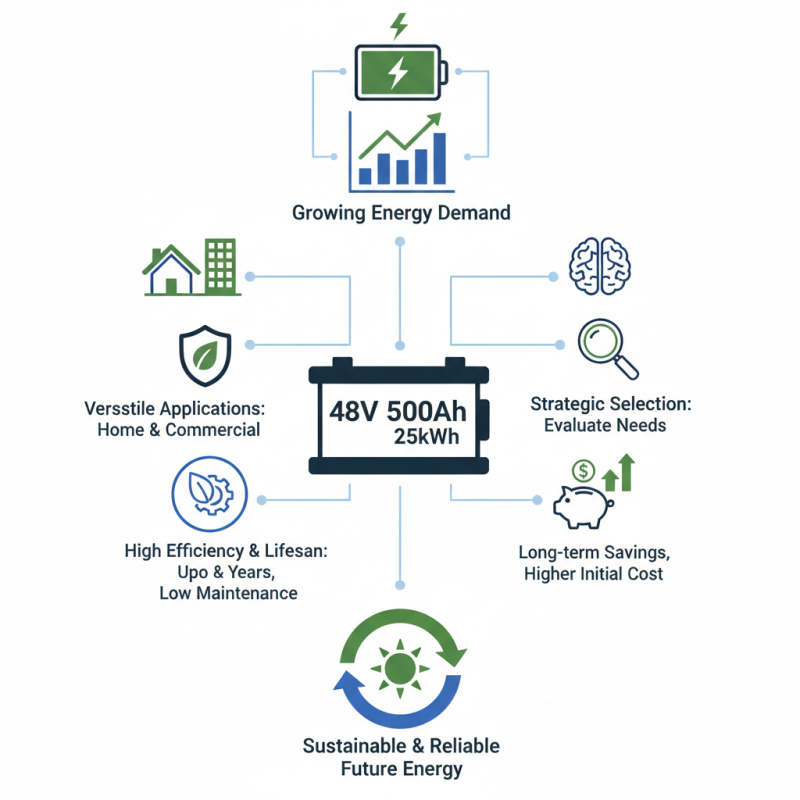
The demand for sustainable energy solutions is rising rapidly. Many households and businesses are transitioning to green technologies. A significant player in this transition is the 48v500ah (25kwh) Lithium Battery. According to recent industry reports, global lithium battery demand is projected to grow by 17.5% annually through 2024.
Why should you consider a 48v500ah (25kwh) Lithium Battery? Its capacity provides ample energy storage for various applications. Whether for home energy systems or commercial use, this battery can meet diverse needs. Lithium technology significantly outperforms traditional lead-acid options in efficiency and lifespan. For instance, lithium batteries can last up to ten years, delivering consistent performance while requiring minimal maintenance.
It's essential to approach battery selection strategically. While the 48v500ah (25kwh) Lithium Battery presents numerous advantages, not all users may need such capacity. Evaluating individual energy demands is crucial. Adopting this advanced technology could yield significant savings, but initial costs might be higher. Each choice should be based on informed decisions and future energy goals, ensuring reliable and sustainable energy for years to come.
Benefits of a 48V500Ah 25kWh Lithium Battery for Home Energy Storage
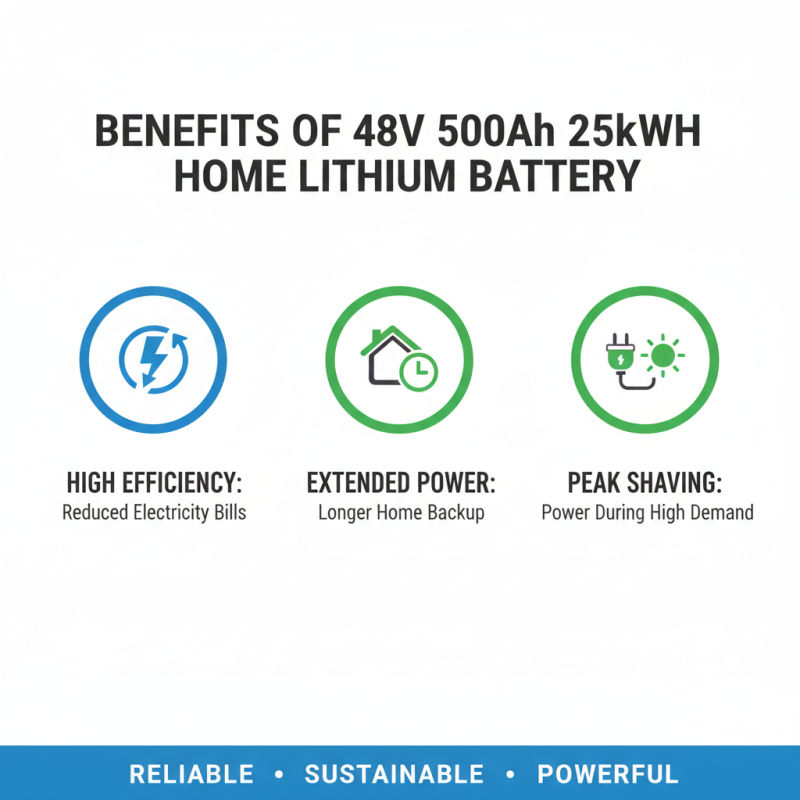
A 48V500Ah 25kWh lithium battery presents a compelling option for home energy storage. One key benefit is its efficiency. This type of battery charges and discharges optimally, reducing electricity costs. Its impressive capacity allows it to power a home significantly longer than smaller alternatives. Imagine running appliances, lights, and even HVAC systems smoothly during peak hours.
Durability is another advantage. Lithium batteries are known for their long lifespan, often lasting over a decade with proper care. This longevity means fewer replacements, which can be both time-consuming and expensive. Additionally, they perform well in a variety of environmental conditions, making them a reliable choice for homeowners. However, the installation process can be complex and may require professional assistance.
Using this battery also supports sustainability efforts. It enables better utilization of renewable energy, like solar. Homeowners can store excess energy generated during the day for night use. This capability encourages energy independence and reduces reliance on the grid. Some may find the initial investment high. It’s vital to weigh the long-term savings against upfront costs. Careful consideration in planning can lead to smart energy decisions for your home.
Comparative Analysis of Lithium Battery Efficiency and Lifespan
When considering energy solutions, lithium batteries stand out for their efficiency and longevity. A 48v500ah 25kwh lithium battery offers substantial advantages in this regard. According to a report from the International Energy Agency, lithium-ion batteries have a lifespan averaging 2,000 to 7,000 cycles, depending on usage and maintenance. This durability means fewer replacements, translating to lower long-term costs.
Efficiency is another critical factor. These batteries typically reach 90% efficiency in energy conversion. This efficiency reduces waste, making them suitable for various applications, including solar energy storage. The National Renewable Energy Laboratory indicates that lithium batteries can improve a solar system's overall efficiency by nearly 20%. High efficiency and good lifespan make them ideal for both residential and commercial use.
However, it's essential to acknowledge some limitations. While lithium batteries excel in performance, they can be sensitive to temperature changes. Extreme heat or cold may impact their lifespan. Additionally, the initial cost can be a barrier for some users. Despite these challenges, the benefits often outweigh the drawbacks, making lithium technology a compelling choice for modern energy needs.
Why Choose a 48v500ah 25kwh Lithium Battery for Your Energy Needs? - Comparative Analysis of Lithium Battery Efficiency and Lifespan
| Battery Type |
Voltage (V) |
Capacity (Ah) |
Energy (kWh) |
Cycle Life |
Efficiency (%) |
Weight (kg) |
| Lithium Iron Phosphate |
48 |
500 |
24 |
2000 |
95 |
45 |
| Lithium Cobalt Oxide |
48 |
500 |
24 |
1200 |
90 |
50 |
| Lithium Manganese Oxide |
48 |
500 |
24 |
1500 |
92 |
48 |
| Lithium Nickel Manganese Cobalt |
48 |
500 |
24 |
1600 |
93 |
49 |
Environmental Impact: Advantages of Lithium Batteries over Lead-Acid
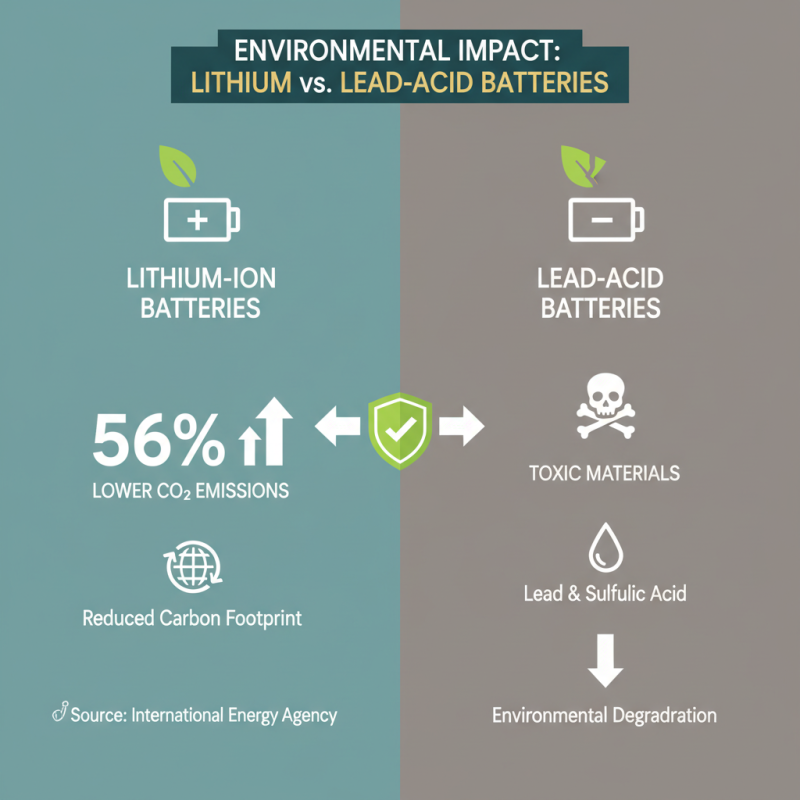
Lithium batteries are becoming increasingly popular due to their environmental advantages over lead-acid alternatives. Research from the International Energy Agency indicates that lithium-ion batteries can reduce carbon emissions by up to 56% compared to traditional lead-acid batteries. This reduction is significant, as lead-acid batteries contribute to environmental degradation through toxic lead and sulfuric acid.
One major benefit of lithium batteries is their higher energy density. They can store more energy in a smaller space. A 48V 500Ah lithium battery offers about 25 kWh of energy, which is sufficient for most residential applications. In contrast, to achieve similar energy capacity, significantly larger lead-acid batteries would be required, occupying more physical space and leading to increased environmental impact.
Recycling is another critical factor. Lithium batteries are often recyclable, with recovery rates of up to 95%. In contrast, only around 30% of lead from lead-acid batteries is recovered. This discrepancy raises questions about long-term sustainability in battery disposal. Investing in lithium technology not only meets energy needs but also addresses pressing environmental concerns. However, potential challenges remain, including managing lithium resource extraction and ensuring ethical sourcing.
Cost-Effectiveness: Long-Term Savings with Lithium Battery Technology
When it comes to energy storage, cost-effectiveness is a major concern. A 48V 500Ah 25kWh lithium battery stands out as an excellent choice. This battery technology has been proven to offer significant long-term savings. The initial investment might seem high, but the returns are worth it. Lithium batteries have a longer lifespan, reducing the need for frequent replacements.
Additionally, lithium batteries require less maintenance compared to traditional options. This leads to reduced operational costs over time. Their efficiency is notable. They charge faster and discharge power more effectively. As energy prices fluctuate, having a reliable energy source can stabilize your expenses.
However, it's essential to consider potential challenges. While lithium batteries perform well in many scenarios, they can be sensitive to extreme temperatures. This may affect their lifespan and efficiency. Understanding these nuances can help users make informed decisions. While the advantages are clear, buyers should also be prepared for these considerations. Careful planning can ensure that the investment in lithium technology pays off in the long run.
Applications of 48V500Ah Batteries in Renewable Energy Systems
The 48V500Ah lithium battery offers significant benefits in renewable energy systems. These batteries provide reliable energy storage, crucial for solar and wind power applications. Their high capacity, 25kWh, ensures sufficient power supply even during cloudy days or low wind periods.
In residential setups, these batteries enable homeowners to store solar energy effectively. They can power appliances during the night, maximizing energy efficiency. In commercial settings, the scalability of 48V500Ah systems allows for adaptable energy solutions. Businesses can maintain operations seamlessly even during outages.
However, it’s essential to consider the initial investment. While these batteries promise longevity, they require a sound understanding of energy needs. Users may face challenges in optimizing performance. Understanding these factors is vital for successful implementation.