Leave Your Message

What is an Industrial Battery and How is it Used?

As industries evolve, the role of the Industrial Battery becomes increasingly critical. According to Dr. Emily Carter, a leading expert in energy storage systems, "Industrial batteries are the backbone of modern manufacturing." This highlights their importance in providing reliable power for various applications.

Industrial batteries are essential for powering machinery, supporting renewable energy sources, and storing energy for later use. They play a significant role in sectors like manufacturing, transportation, and telecommunications. However, their complexity often raises questions. Not every battery solution fits every application. Choosing the right system requires careful consideration.

Experts like Dr. Carter emphasize the need for innovation in this field. Many existing solutions can be improved. As industries demand more energy and efficiency, manufacturers must focus on sustainable practices. Sites that rely on industrial batteries should evaluate their current systems. Could there be better options available? Addressing these challenges is crucial for future advancements.

What is an Industrial Battery and How is it Used?

Definition and Overview of Industrial Batteries

What is an Industrial Battery and How is it Used?

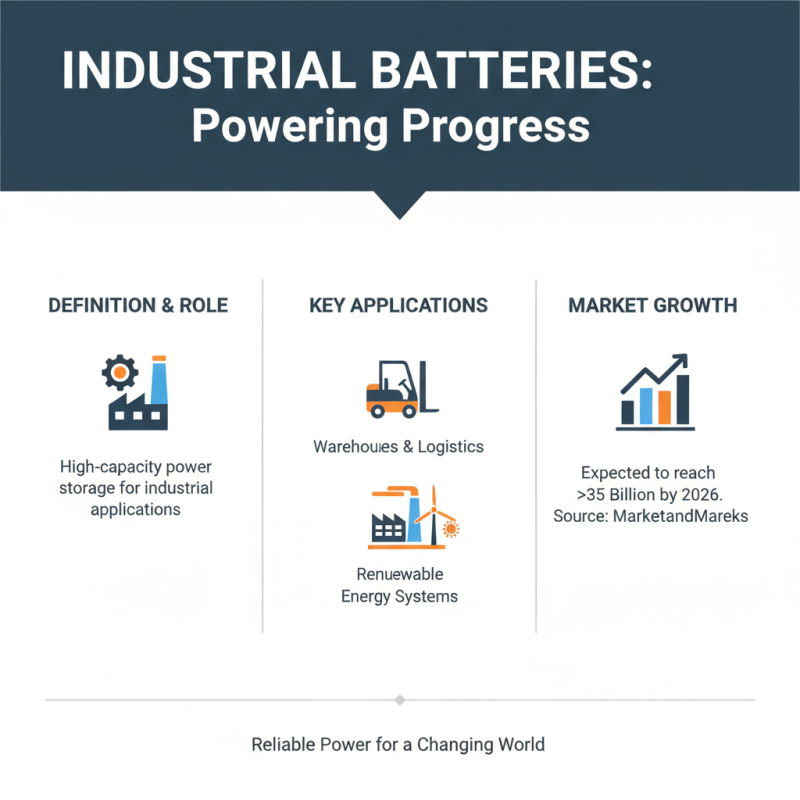
Industrial batteries play a crucial role in powering various sectors. These batteries are designed for high-capacity applications, often used in warehouses, factories, and renewable energy systems. According to a report by MarketsandMarkets, the industrial battery market is expected to grow significantly, reaching over $35 billion by 2026. This growth reflects the increasing demand for reliable power sources in industrial settings.

Industrial batteries comprise several types, including lead-acid, nickel-cadmium, and lithium-ion. Each type serves specific applications, offering varying performance metrics and lifecycle costs. For instance, lithium-ion batteries are preferred for their high energy density and efficiency, while lead-acid batteries are commonly used for their proven reliability. However, there are challenges. The recycling and disposal of these batteries remain an area needing improvement, with estimates suggesting that less than 10% of lithium-ion batteries are recycled effectively.

Tips: When selecting an industrial battery, consider the application requirements. Assess the energy needs and lifecycle costs carefully. It's essential to keep up with advancements in battery technology. Newer solutions may offer better efficiency and sustainability. Learning from industry reports and expert analyses can guide your choices effectively.
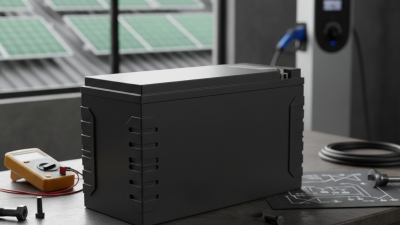
Types of Industrial Batteries and Their Characteristics

What is an Industrial Battery and How is it Used?

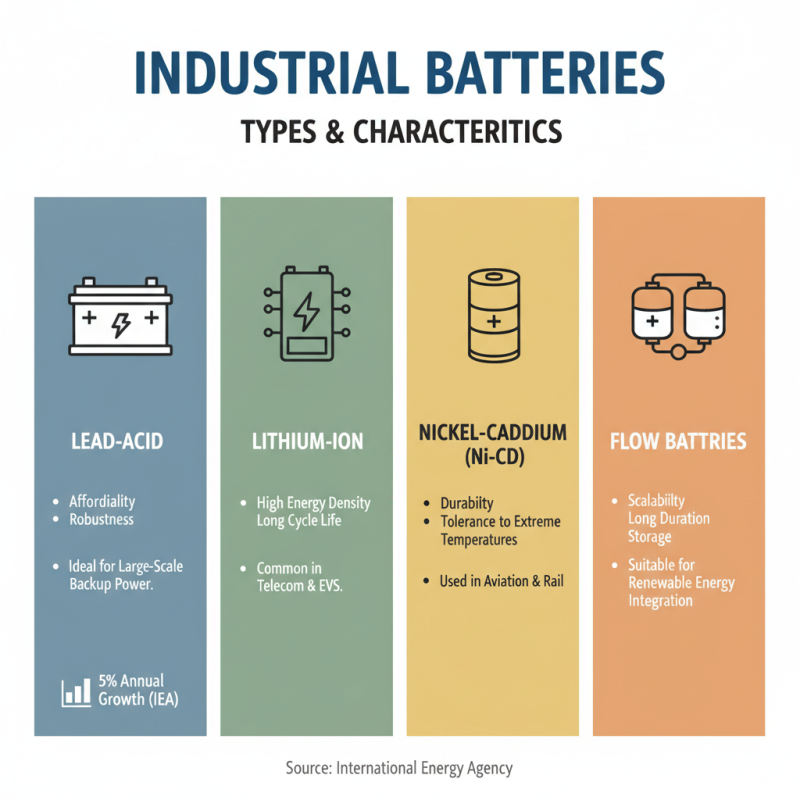
Industrial batteries play a crucial role in various sectors, including manufacturing, telecommunications, and renewable energy. The most common types include lead-acid, lithium-ion, nickel-cadmium, and flow batteries. Each type exhibits distinct characteristics that cater to different industrial needs. For example, lead-acid batteries are known for their affordability and robustness, making them ideal for large-scale backup power systems. According to the International Energy Agency, the lead-acid battery market is expected to grow significantly, with a projected annual increase of 5% over the next five years.

On the other hand, lithium-ion batteries are favored for their high energy density and efficiency. They are extensively used in electric vehicles and renewable energy storage. A recent report by BloombergNEF states that lithium-ion batteries have seen a price decrease of 89% since 2010, driving their adoption in industrial applications. However, concerns about sustainability and mining practices persist, necessitating further reflection on long-term impacts. Nickel-cadmium batteries, while having a longer lifecycle, are facing regulatory scrutiny due to environmental issues.

Choosing the right industrial battery requires an understanding of these trade-offs. Energy efficiency, cost, and environmental impact should all be considered. Industrial facilities often grapple with reliability versus sustainability. It’s essential to assess current needs and future demands before making a decision.

Applications of Industrial Batteries in Various Industries

Industrial batteries play a crucial role in powering various sectors. They are vital in sectors such as manufacturing, telecommunications, and renewable energy. According to a recent market report by Allied Market Research, the industrial battery market is expected to reach $162 billion by 2027. This highlights the growing dependency on reliable energy storage systems.

In manufacturing, industrial batteries support equipment like forklifts and conveyor belts. They ensure smooth operations in factories. In telecommunications, batteries enable backup power for critical communication systems. This continuity is crucial during outages. The energy storage sector, particularly in solar and wind applications, is also expanding. Research shows that nearly 30% of renewable energy projects utilize batteries for storing energy.

Despite their advantages, there are challenges. Not everyone has access to cutting-edge technology. Older battery systems may not meet modern energy demands. There are also environmental concerns associated with battery disposal and recycling. As the industry evolves, addressing these issues becomes essential for sustainable practices.

Key Benefits and Advantages of Using Industrial Batteries

Industrial batteries are crucial for powering various systems in sectors like manufacturing, telecommunications, and renewable energy. They offer several key benefits that enhance operational efficiency.

One significant advantage is their reliability. Industrial batteries provide a steady power supply, ensuring that machines operate without interruptions. This reliability helps reduce downtime, which can be costly. Additionally, they often have a longer lifespan compared to standard batteries, meaning that businesses save on replacement costs in the long run.

Tips: Regular maintenance can extend battery life. Check battery connections and cleanliness frequently.

Another benefit is energy efficiency. Many industrial batteries have the capability to store and release energy effectively, making them ideal for renewable energy integration. This can also lead to a decrease in energy costs. However, it's important to note that not all industrial batteries are created equal, and each type has its specific use case.

Tips: Understand your energy needs before selecting a battery. Consider the environment where it will be used.

Despite their advantages, there are challenges. The initial investment can be significant. Businesses must carefully evaluate their specific requirements to ensure the chosen battery meets their needs without being over or underutilized.

What is an Industrial Battery and How is it Used? - Key Benefits and Advantages of Using Industrial Batteries

Battery Type Capacity (Ah) Voltage (V) Cycle Life Typical Applications Key Benefits
Lead-Acid 100-2000 2, 6, 12 500-800 cycles forklifts, UPS systems Cost-effective, reliable
Lithium-Ion 50-5000 3.7 2000-5000 cycles renewable energy systems, electric vehicles High energy density, fast charging
Nickel-Cadmium 100-1000 1.2 2000 cycles telecommunication, emergency lighting Long service life, exceptional performance at low temperatures
Sodium-Sulfur 200-3000 192 2500-4000 cycles grid energy storage, load leveling High energy capacity, environmentally friendly
Flow Batteries 100-10000+ varies 5000+ cycles large-scale energy storage Scalable, long duration energy storage

Maintenance and Safety Practices for Industrial Batteries

Industrial batteries play a critical role in various sectors, but their maintenance and safety cannot be overlooked. Regular checks are essential to ensure their longevity and efficiency. According to the Battery Council International, approximately 80% of premature battery failures can be attributed to inadequate maintenance practices. Simple measures, like monitoring electrolyte levels and cleaning terminals, can significantly extend battery life.

When handling industrial batteries, safety practices are paramount. Protective gear is not optional. Reports indicate that lack of proper gear can lead to accidents and injuries, with an estimated 4,000 incidents occurring annually in industrial settings. Workers should understand the risks of acid spills and gas emissions. Adequate training in proper handling and emergency procedures can mitigate these hazards effectively.

In addition to routine maintenance, implementing a well-structured battery management system is crucial. Such systems can track usage patterns and predict failures. However, awareness of limitations is vital. Not all systems provide real-time data, which can lead to unexpected downtime. While technology can enhance safety and efficiency, it's essential to remain vigilant about battery care to avoid costly operational disruptions.

Industrial Battery Usage and Maintenance Practices

This bar chart illustrates the percentage usage of various types of industrial batteries across different sectors. Lead-acid batteries dominate the market due to their established presence and cost-effectiveness, while lithium-ion batteries are increasingly popular for their efficiency and compactness. Nickel-cadmium, sodium-sulfur, and flow batteries make up smaller portions but are vital in specific applications.