Leave Your Message

China Top 10 Deye Inverter Suppliers for Global Buyers

Choosing a Deye Inverter supplier in China is not just a price comparison. Buyers also need to check product fit, warranty terms, export experience, and support after delivery. A polished datasheet is useful, but it cannot show how quickly a supplier answers a technical question or handles a spare-parts request. Small details matter. Energy-efficiency expert Amory Lovins is often quoted as saying, “The cheapest energy is the energy you don’t use.” For buyers, that idea makes careful system sizing and clear technical advice worth evaluating alongside the inverter’s purchase price.

This guide introduces ten suppliers for global buyers to investigate, not a permanent ranking or a guarantee of performance. Supplier capabilities can differ by model, destination, and order size. Compare grid-tied and hybrid options against the project’s voltage, capacity, monitoring, and installation requirements. Ask for current product documents, applicable market certifications, warranty conditions, and a named service contact. Check whether the company is a manufacturer, an authorized channel partner, or a trading business. That distinction can affect communication and after-sales support. No shortlist is perfect. Even a strong supplier may not fit every project, and buyers should verify claims independently before committing. The aim here is practical: help procurement teams ask sharper questions, spot gaps early, and choose a Deye Inverter partner with evidence—not promises.

China Top 10 Deye Inverter Suppliers for Global Buyers

Understanding Deye Inverters and Their Global Applications

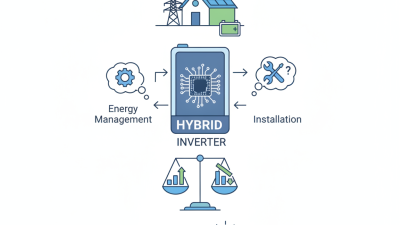
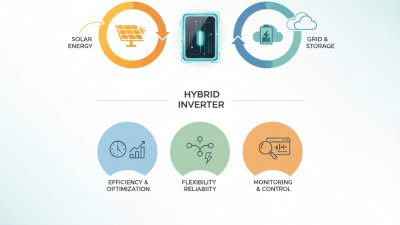
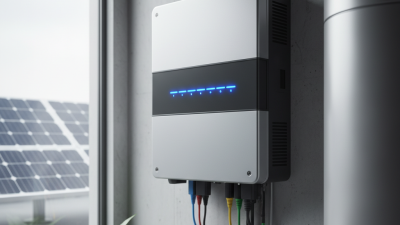
Deye inverters are designed for diverse solar applications, from rooftop systems to small commercial microgrids. Their value depends on operating conditions, not only rated output. Hybrid models can coordinate solar panels, batteries, household loads, and the public grid. Multiple maximum power point trackers help manage roofs with different angles or partial shading. In practical installations, installers should check voltage ranges, battery communication, protection settings, and local grid requirements. A system may look efficient on paper but perform poorly with unsuitable batteries or weak ventilation.

Global demand is expanding quickly. IRENA’s Renewable Capacity Statistics 2024 reported 473 GW of renewable capacity added worldwide in 2023, including about 346 GW of solar power. The IEA’s Renewables 2024 report forecasts more than 5,500 GW of renewable additions between 2024 and 2030, with solar accounting for roughly 80 percent. These figures explain growing interest from distributors and engineering firms. Still, procurement requires evidence. Buyers should request independent efficiency tests, warranty terms, firmware support, and records from comparable climates. That assumption can fail. Heat, dust, unstable voltage, and limited installer training can reduce real-world performance. A reliable supplier should provide clear documentation, spare-part access, and commissioning guidance rather than promising perfect results.
How China’s Deye Inverter Supplier Network Is Organized

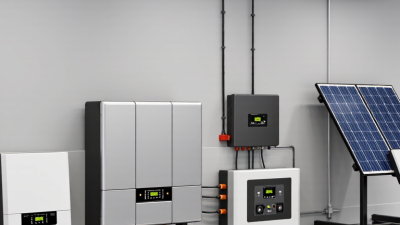
China’s inverter supply network is layered rather than a single export channel. Manufacturers typically work through export teams, regional distributors, wholesalers, and local installation partners. Each layer handles different tasks: quotations and documentation, stockholding, commissioning, or after-sales support. For global buyers, the key question is not simply who offers the lowest unit price. It is who can provide serial-number traceability, compatible accessories, and a clear route for warranty claims. Small details matter. A missing communication cable can delay commissioning as much as a late shipment.

The network’s scale reflects China’s broader clean-energy manufacturing base. IRENA’s Renewable Capacity Statistics 2024 reports that China added about 297.6 GW of renewable power capacity in 2023, the largest national addition that year. This figure covers renewable generation, not inverter shipments, so it should not be treated as a direct measure of supplier capacity. Buyers should compare export records, regional service coverage, and spare-parts availability separately. Ask for written response times and the name of the party responsible for field support. That part is less tidy. In some markets, distributor and installer responsibilities overlap, leaving customers unsure whom to contact when an installation fault appears.

Profiles of 10 Deye Inverter Suppliers in China

China’s inverter supply base is expanding with global solar demand. The IEA PVPS Trends 2024 report recorded more than 450 GW of new photovoltaic capacity in 2023. Cumulative global capacity exceeded 1.6 TW. This growth increases pressure on suppliers to deliver reliable conversion equipment, not merely attractive prices.

The ten Chinese supplier profiles examine factory capability, export experience, certification control, and technical support. Several suppliers offer residential, commercial, and storage inverter solutions. Others focus on compact models for rooftop systems or higher-capacity units for commercial projects. Buyers should check production records, warranty procedures, grid-code compatibility, and replacement-part availability. Certificates matter. Traceability matters more.

Supplier evaluation also considers communication during installation. A responsive engineering team can reduce commissioning delays and prevent repeated site visits. The IRENA Renewable Capacity Statistics 2024 report shows solar remained the fastest-growing renewable power segment, with hundreds of gigawatts added worldwide in 2023. That momentum creates opportunities, but it also exposes weak quality systems. Some supplier profiles look impressive on paper, yet field performance may vary between batches. This is easy to overlook. Independent testing, sample orders, and factory audits provide stronger evidence than brochures. Even experienced buyers can miss small details, especially firmware support and local service capacity.

Comparing Suppliers by Product Range, Service, and Export Experience

For global buyers, comparing ten Chinese inverter suppliers should begin with product fit, not catalogue size. Check whether each supplier offers the required power range, grid or hybrid configurations, monitoring tools, and compatible storage options. IRENA’s Renewable Capacity Statistics 2024 reports that global renewable capacity grew by 473 GW in 2023, including 346 GW of solar. The IEA’s Renewables 2022 forecast projected 2,400 GW of renewable capacity growth between 2022 and 2027. These figures point to a fast-expanding market, where product availability and technical support can matter as much as price. Details matter.

Service claims deserve evidence. Ask for response-time targets, warranty handling steps, firmware update procedures, and access to technical staff across time zones. A polished brochure proves little. Request a sample troubleshooting record or a clear escalation path, then check whether the answers are specific. Some buyers overlook this until a system fault delays commissioning.

Export experience is best judged through verifiable shipment records, packaging standards, and experience preparing documentation for the buyer’s destination. Compare delivery lead times, spare-parts availability, and references from projects with similar climates and grid conditions. A supplier may have broad export reach yet limited experience in a particular market. That gap is easy to miss. A balanced comparison should score product range, after-sales service, and export capability separately, rather than letting a low quote decide the ranking.

How Global Buyers Can Evaluate and Source from Suppliers

China Top 10 Inverter Suppliers for Global Buyers

Global buyers should assess ten shortlisted Chinese inverter suppliers against measurable evidence, not catalogue claims. IRENA reported 473 GW of renewable capacity additions in 2023, with solar contributing most of the growth. This scale increases sourcing opportunities, but it also raises quality risks. Request factory audit records, production capacity, failure-rate data, and certifications for the destination market. Ask for serial-level traceability. Small details matter.

Technical review should cover maximum efficiency, operating temperature, surge protection, communication protocols, and grid-support functions. The IEA’s Renewables 2024 report expects global renewable capacity to expand by almost 5,500 GW between 2024 and 2030. Suppliers must therefore demonstrate stable production, firmware control, and replacement-part availability. A laboratory certificate alone is not enough. Test random samples independently.

Commercial due diligence needs equal attention. Compare warranty terms, response times, spare-part locations, payment protection, and export experience. Request references from projects with similar voltage, climate, and installation scale. A supplier offering the lowest price may create higher lifetime costs through downtime. Yet buyers can over-audit and delay practical decisions. Use a weighted scorecard, pilot order, and written acceptance criteria. Review the results after six months, because early performance can be misleading.