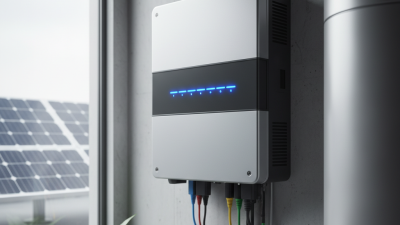
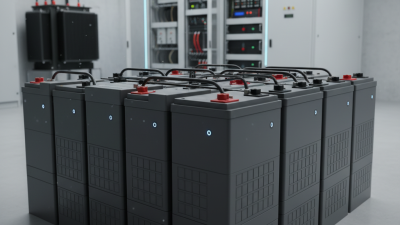
Choosing the right Deye 12kw inverter requires more than comparing prices and output figures. A large display may look impressive, but it cannot reveal every installation challenge. Roof direction, daily consumption, battery voltage, backup priorities, and grid conditions all influence the correct choice.
This guide presents seven practical tips for evaluating a Deye 12kw system with greater confidence. It considers power demand, solar panel sizing, MPPT flexibility, battery compatibility, protection features, monitoring options, and after-sales support. These details matter when a refrigerator starts during a cloudy afternoon or several essential loads operate together. A specification sheet alone is not enough.
Reliable selection should combine manufacturer data, qualified installer advice, and local electrical requirements. Check the latest technical manual before purchasing. Product versions and regional specifications can differ. An experienced installer should also confirm cable sizes, ventilation space, surge protection, and commissioning procedures. Small oversights may cause costly delays.
The guide also acknowledges an uncomfortable point: the “best” inverter is not always the most powerful one. Oversizing can increase costs without improving household performance. Undersizing can create nuisance shutdowns and disappointing backup results. Real consumption records are more useful than assumptions. Keep your recent electricity bills nearby. Note evening loads, motor-driven appliances, and future plans such as electric vehicles. With careful comparison, the Deye 12kw can become a practical part of a balanced solar and storage design. Yet every project deserves individual verification.
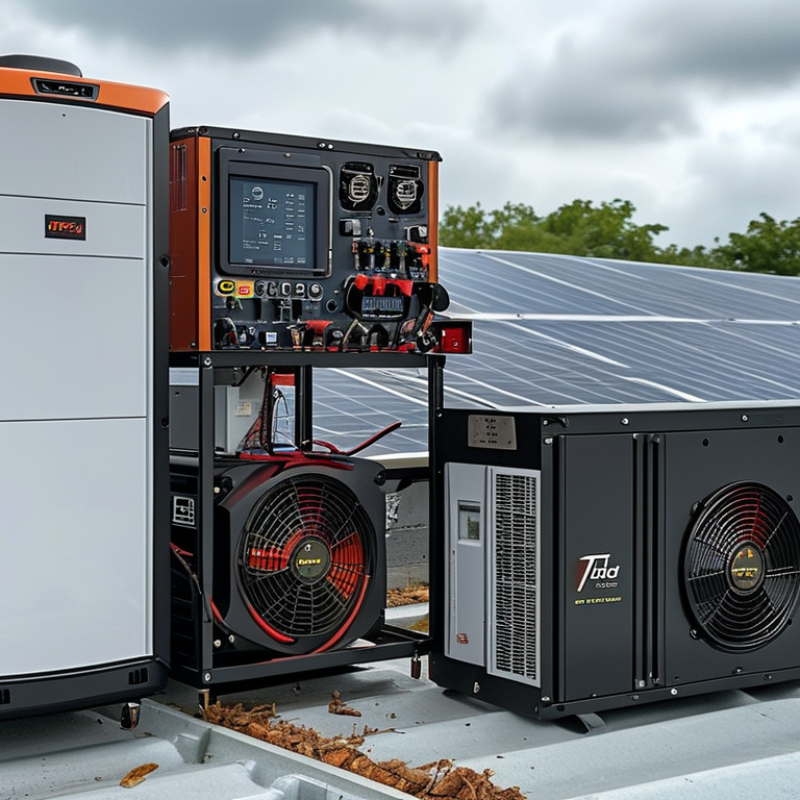
Tip 1: Define your real energy needs before choosing a 12kW inverter. List essential loads, such as refrigeration, lighting, water pumps, internet equipment, and medical devices. Record each appliance’s running watts and starting surge. A pump may briefly demand much more power than its label suggests. My first estimate was too optimistic because I ignored motor startup.
Tip 2: Separate comfort loads from critical loads. During an outage, you may want lights and cooling, but heating elements can quickly drain a battery. Test your daily routine for one evening. Run the refrigerator, a few lamps, your router, and one kitchen appliance. Measure the result if possible. Real measurements beat guesses.
Tip 3: Match backup expectations with battery capacity and outage length. A 12kW inverter can support substantial loads, but it cannot create unlimited energy. Decide whether you need two hours overnight or several cloudy days. Then discuss battery size, solar input, transfer time, and circuit limits with a qualified installer. Ask for a written load calculation, not a confident promise.
Think about future changes, too. An electric vehicle, workshop tool, or larger air conditioner may alter your demand. I would leave some capacity unused. It feels inefficient, but it improves resilience and reduces stressful compromises during an outage. Check local installation requirements and request a practical backup test before final acceptance.
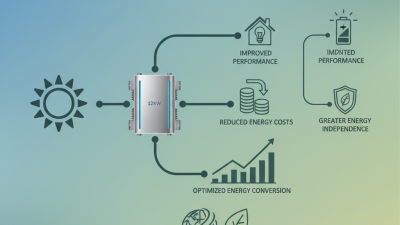
A 12 kW inverter must match both the solar array and the battery system. The IEA PVPS Trends 2024 report recorded over 400 GW of new solar capacity in 2023, showing why correct system design matters.
Tip 1: Add each panel’s open-circuit voltage in cold weather. The total must remain below the inverter’s maximum DC voltage.
Tip 2: Compare panel operating current with each MPPT’s input limit.
Tip 3: Check the inverter’s recommended PV oversizing range, not only its headline power.
Tip 4: Confirm the battery’s nominal voltage and working voltage range. A high-voltage battery cannot safely connect to a low-voltage input.
Tip 5: Match continuous charge and discharge currents. A large battery may still deliver limited power.
Tip 6: Verify communication protocols, including CAN or RS485, before purchasing cables or batteries. Compatibility is more than a matching connector.
NREL’s 2024 Annual Technology Baseline estimates lithium-ion storage round-trip efficiency near 85–90%, but poor settings can reduce real performance.
Tip 7: Check local grid-code requirements, backup output limits, and neutral wiring. IEC 62109 covers inverter safety, while IEC 62477 addresses power electronic systems. Ask a qualified installer to review the single-line diagram and protection devices. A neat spreadsheet can still miss shading, cable losses, or cold-start behavior. Leave some design margin. It may cost slightly more, yet rushed matching often costs more later.
Choosing a 12kW hybrid inverter starts with the load, not the label. Compare continuous output, surge capacity, MPPT range, and maximum solar input. A home with pumps or compressors needs stronger short-term headroom. Check phase compatibility and local grid requirements before comparing prices. Battery voltage also matters. Low-voltage batteries simplify replacement, while high-voltage systems can reduce current and cable size. The cheaper option is not always easier to install.
Operating modes show how the inverter behaves each day. Self-consumption mode powers household loads from solar, then charges the battery. Time-of-use mode can charge during cheaper tariff periods and discharge during expensive hours. Backup mode reserves energy for outages, but excessive reserve settings may waste usable capacity. Zero-export mode needs accurate current sensors and careful commissioning. Test it. Fast backup switching sounds useful, but sensitive equipment may still need a dedicated UPS.
For reliable selection, review the wiring diagram, protection features, warranty terms, and firmware support. Check whether monitoring records battery temperature, charge level, and grid events. Field checks often reveal practical problems. A sensor installed backward can disrupt export control. Poor ventilation may also reduce output during hot afternoons. Leave space for maintenance and future battery expansion, although expansion assumptions can be wrong. Confirm battery compatibility before purchasing.
Compare the main operating modes by identifying which energy source normally supplies the load. The exact behavior depends on system settings, battery availability, grid conditions, and local electrical regulations.
Scale: 1 = the source is normally active or available in the operating mode; 0 = the source is normally not the primary source. PV self-consumption prioritizes solar energy, backup mode prioritizes stored energy during outages, peak shaving combines grid and battery power, and grid bypass relies mainly on the utility supply.
A 12 kW inverter needs more than a suitable price and output rating. Start with a site survey: record panel voltage, maximum current, roof direction, cable length, ambient temperature, and available wall space. IRENA’s Renewable Capacity Statistics 2024 reported 473 GW of renewable capacity additions in 2023, with solar contributing 346 GW. Fast growth makes careful installation screening more important.
Tip 1: Check the electrical design before purchasing. Confirm compatibility with the battery voltage, grid phase, backup loads, and local export limits. Leave clear airflow around the enclosure. A hot, crowded utility room can reduce reliability. Tip 2: Inspect protection requirements. Use correctly rated disconnects, surge protection, grounding, and residual-current protection where required. Do not copy a diagram from another country. Local codes matter more.
Tip 3: Verify safety certification, not just a marketing label. Look for conformity with IEC 62109-1 and IEC 62109-2, or IEC 62477-1, plus applicable grid-interconnection testing such as IEC 62116. Certification does not replace approval from the local authority or utility. Tip 4: Ask for test reports and the exact model number. A certificate for a similar product may not cover your unit. Small detail, large risk. Tip 5: Have a qualified installer test insulation resistance, polarity, grounding continuity, and anti-islanding performance. The IEA PVPS Trends 2024 report shows global solar deployment has reached the terawatt scale, yet installation quality remains uneven. I may be overly cautious, but skipping one measurement can cost far more than the inspection.
| No. | Evaluation Area | What to Check | Practical Requirement or Calculation | Evidence to Request | Decision |
|---|---|---|---|---|---|
| 1 | Grid and Phase Compatibility | Confirm whether the property uses single-phase or three-phase power, and verify the permitted voltage and frequency with the utility. | At 12 kW, the approximate current is 52.2 A at 230 V single-phase, or 17.3 A per phase at 400 V three-phase, before considering power factor and efficiency. | Utility interconnection rules, service rating, electrical drawings, and the inverter’s rated AC voltage and frequency range. | Suitable |
| 2 | Solar Array Sizing | Compare the inverter’s maximum PV power, MPPT voltage range, maximum DC voltage, and maximum input current with the planned module layout. | Check the cold-weather open-circuit voltage of each string and ensure it remains below the inverter’s maximum DC voltage. Confirm string operating voltage remains inside the MPPT window. | PV module electrical data, local minimum temperature, string-design calculation, and the inverter technical datasheet. | Pass |
| 3 | Battery and Backup Requirements | Determine whether battery storage, backup power, or whole-home load support is required. | Verify battery voltage range, continuous charge and discharge current, peak backup power, transfer time, and whether motor-starting loads are supported. | Battery compatibility list, backup wiring diagram, load schedule, and manufacturer limits for continuous and surge output. | Verify |
| 4 | Protection and Safety | Review overcurrent, surge, ground-fault, anti-islanding, overvoltage, overtemperature, and short-circuit protection. | Use correctly rated DC and AC disconnects, circuit breakers, surge protective devices, grounding conductors, and residual-current protection where required by local codes. | Protection specifications, installation manual, single-line diagram, and inspection requirements applicable to the installation location. | Required |
| 5 | Environmental and Installation Conditions | Assess ambient temperature, humidity, dust, rain exposure, mounting surface, ventilation, and service clearance. | Select an enclosure rating appropriate to the location; an IP65 enclosure is generally dust-tight and protected against water jets, but it does not eliminate the need for correct mounting and drainage. | Environmental rating, operating-temperature range, derating curve, clearance diagram, and mounting instructions. | Assess |
| 6 | Certification and Grid Compliance | Ensure the exact model and firmware version meet the regulations of the installation country and utility. | Look for applicable safety and grid-interconnection standards, such as IEC 62109-1/2, IEC 62116, IEC 61727, or local equivalents. Requirements vary by jurisdiction. | Current certificates, accredited laboratory reports, declaration of conformity, utility approval, and model-number verification. | Confirm |
| 7 | Monitoring, Service, and Total Cost | Evaluate monitoring access, software updates, warranty terms, installer support, replacement procedures, and lifecycle cost. | Compare purchase price plus protection equipment, installation labor, communications hardware, maintenance, and possible downtime—not only the inverter’s nameplate rating. | Warranty document, service response terms, monitoring functions, spare-parts policy, installer credentials, and itemized quotation. | Compare |
Note: Final selection and installation should be completed by a qualified electrical professional in accordance with local electrical and grid-interconnection requirements.
Tip 1
Read the warranty before comparing output ratings. A strong warranty should state coverage length, replacement procedures, and excluded parts. Check whether labor, shipping, and site visits are included. Some policies look generous but offer limited practical help. Keep the invoice and installation record in a safe folder.
Tip 2
Test the monitoring tools before purchase. A useful platform should show daily production, battery status, grid use, and fault history. Alerts should arrive quickly on both phone and email. Ask whether data remains accessible after an installer changes. I once saw a system producing normally while its dashboard showed no updates for three days. The inverter worked, but the missing information created unnecessary doubt.
Tip 3
Investigate long-term support in your area. Confirm firmware update methods, technical response times, spare-parts availability, and approved service technicians. Ask who handles a failure after the original installer closes. Written answers matter more than friendly promises. Also check whether remote diagnostics require a subscription or stable internet connection. That detail is easy to miss.
A 12kW inverter deserves more than a short warranty headline.
Compare the actual support process, not only the promised years. If possible, request a sample service ticket and examine its response path. This may feel excessive, but downtime can affect batteries, appliances, and energy planning. My own preference is simple: clear terms, visible data, and reachable support. Perfect protection is unlikely. Reliable preparation is achievable.