How to Choose the Right 15kw Lithium Battery for Your Energy Needs?
Choosing the right 15kw Lithium Battery is crucial for maximizing energy efficiency. According to recent industry reports, lithium batteries have surged in popularity due to their high energy density and longevity. A report by the International Energy Agency suggests that global demand for lithium batteries will triple by 2025. This highlights the importance of selecting a battery that meets individual energy needs.
Dr. Emily Carter, a leading energy consultant, remarks, "A 15kw Lithium Battery can drastically improve energy management for both homes and businesses." This underscores the fact that careful consideration is essential when investing in such technology. Users must analyze factors like charging times and cycle life. Every application is unique, and a one-size-fits-all approach often leads to disappointment.
Potential buyers may overlook certain specifics. For instance, the weight and size of a 15kw Lithium Battery can greatly influence installation choices. Additionally, some batteries might not perform as advertised in extreme temperatures. Every detail matters. By reflecting on these issues, consumers can make more informed choices. A well-chosen battery will provide reliable power, tailored to specific energy needs.

Understanding Your Energy Requirements for a 15kw Lithium Battery
When choosing a 15kw lithium battery, understanding your energy requirements is critical. Start by assessing your power consumption needs. Look at your appliances, devices, and any larger systems you plan to run. Calculate the wattage each one requires. For example, a refrigerator may need around 200 to 800 watts, while HVAC systems can exceed 1500 watts. This knowledge helps you decide how much reserve power you may need.
Consider your peak usage times. Do you use more energy during the day or night? If you have a solar panel setup, this timing impacts your battery usage. The discharge rate is also crucial. A rapid discharge may not be suitable for devices that require steady power. Remember, not all batteries handle surge loads equally. Reflect on your long-term needs versus immediate ones. An overly powerful battery may lead to underuse, while an insufficient one can cause frustration.
Once you have a clear understanding of your requirements, you can evaluate options. Be ready to adjust your expectations as you learn more. This process is challenging but essential for making informed decisions. Balancing your energy needs with the right battery solution is a nuanced task. Ensure you take time to reassess your choices as your energy usage might change in the future.
How to Choose the Right 15kw Lithium Battery for Your Energy Needs?
| Usage Scenario |
Energy Requirements (kWh) |
Battery Type |
Estimated Lifespan (Years) |
Cost Estimate ($) |
| Residential Solar Backup |
30 |
Lithium Iron Phosphate |
10 |
2000 |
| Off-Grid Living |
40 |
Lithium Nickel Manganese Cobalt |
8 |
2500 |
| Electric Vehicle Charging |
50 |
Lithium Polymer |
6 |
3000 |
| Commercial Use |
80 |
Lithium Titanate |
12 |
3500 |
| Camping/Outdoor Use |
20 |
Lithium Iron Phosphate |
10 |
1500 |
Key Features to Consider in a 15kw Lithium Battery
When selecting a 15kw lithium battery, consider several key features. Capacity is crucial. Ensure the battery can meet your energy consumption needs. Think about how often you will use it. A larger capacity may be beneficial for daily use. Efficiency matters as well. Higher efficiency means less energy wasted. This will save you money in the long run.
Another important aspect is the battery's lifespan. Look for products that offer longevity. A short lifespan means frequent replacements. This can become expensive. Safety features should not be overlooked. Look for batteries with built-in protection. These will prevent issues like overcharging and overheating.
Also, evaluate the weight and size. A heavy battery may limit your installation options. Portability could be a factor for some users. Lastly, check for warranty and support. Not all manufacturers provide the same level of service. A good support system will help you in case of any issues. All these considerations create a framework for making a smart choice. Take your time to analyze and reflect on your specific needs before making a decision.
Evaluating the Brand Reputation and Reliability of Battery Providers
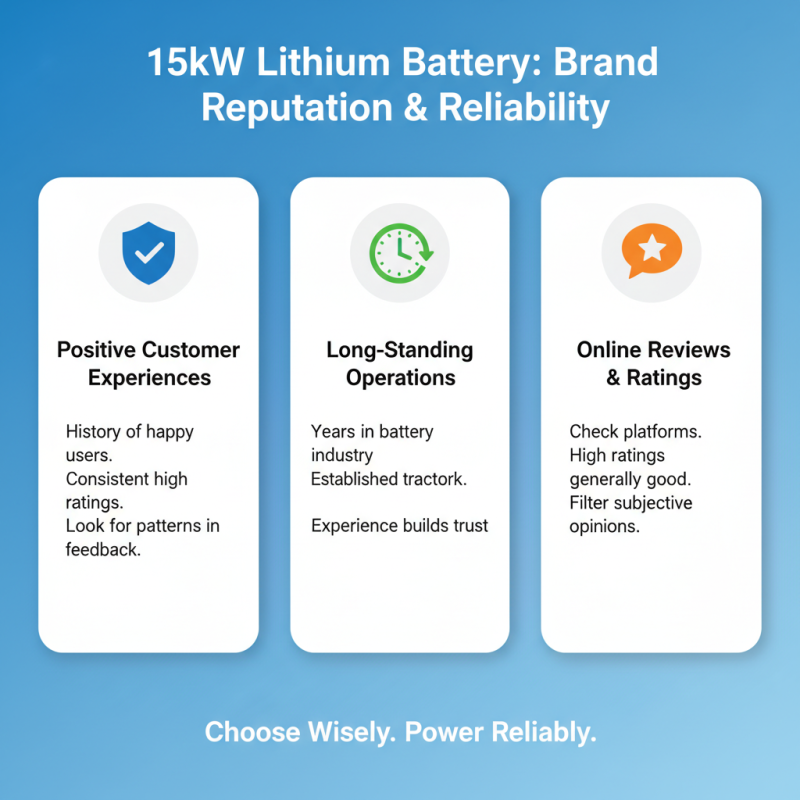
When choosing a 15kw lithium battery, brand reputation matters significantly. A reliable provider usually has a history of positive customer experiences. Look for companies with long-standing operations in the battery industry. You can check their online reviews and ratings. High ratings often indicate trustworthiness, but remember that opinions can be subjective. Focus on patterns in customer feedback rather than isolated reviews.
Consider how the provider communicates and supports its customers. Good customer service reflects a brand's commitment to quality. Look for transparency in their warranty policies and product specifications. Examine how they handle complaints. If responses are prompt and satisfactory, that's a positive sign. Yet, even reputable brands can have their flaws. Investigate if there are consistent issues mentioned by users.
Finally, check the certifications and safety standards the brand adheres to. Certification does not guarantee perfection, but it does show a commitment to quality and safety. Be cautious with very new brands; while they may seem promising, they often lack the credibility of established companies. A thoughtful evaluation of these aspects can lead to a better purchasing decision.
Comparing Costs and Warranty Options for 15kw Lithium Batteries
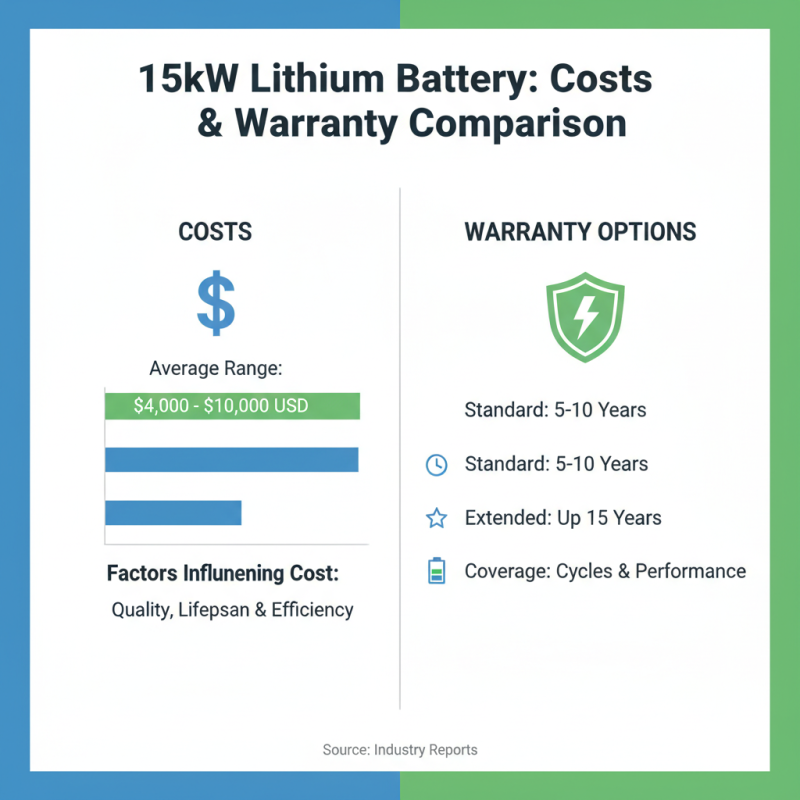
When selecting a 15kw lithium battery, understanding costs and warranty options is crucial. Costs can vary widely based on capacity and features. According to industry reports, the average cost ranges from $4,000 to $10,000. This price difference often reflects battery quality, lifespan, and energy efficiency.
Warranty options also play a vital role. Most manufacturers offer warranties between 5 to 10 years. A longer warranty can indicate confidence in the product’s durability. Some reports show that batteries with extended warranties tend to last longer. However, it is essential to read the fine print. Not all warranties cover the same aspects.
Tip: Always compare warranty terms. Look for coverage on battery degradation and replacement policies.
Some batteries might offer competitive prices but may lack robust warranty terms. Consider the long-term value and not just the upfront costs. You might find lower-priced options, but they can come with hidden issues or fewer benefits.
Tip: Investigate customer reviews and expert opinions for insights. You may uncover experiences that unveil potential weaknesses. Make an informed decision by weighing both cost and reliability together.
Installation and Maintenance Tips for Optimal Battery Performance
Choosing a 15kw lithium battery is a significant decision. Installation can impact performance greatly. Place your battery in a dry, cool area. Avoid direct sunlight. Insufficient ventilation can lead to overheating. This can reduce the battery's lifespan. Regular checks help ensure optimal performance. Monitor temperature and charge cycles closely.
Maintenance is equally important. Clean the terminals with a damp cloth. Dust and dirt can affect connections. Make it a habit to check connections regularly. Tighten any loose ones. Set a schedule for inspections. Look for signs of wear and tear. Batteries don’t last forever. Understanding your usage patterns helps in planning replacements. Reflect on your energy needs frequently.
Battery Capacity Comparison for Energy Needs
This chart illustrates key performance metrics for the 15kW lithium battery. The data includes daily usage, peak power capacity, charging time, cycle life, and depth of discharge, providing insights for users to make informed decisions on their energy needs.