How to Choose the Best Solis Hybrid Inverter for Your Energy Needs?
Choosing the right Solis Hybrid Inverter is crucial for your energy needs. Hybrid inverters play a pivotal role in managing energy efficiency and storage in residential and commercial settings. With varying options available, making an informed choice can be challenging.
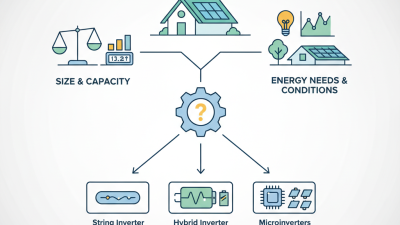
As you explore different models, consider your specific energy requirements. Solis Hybrid Inverters offer features tailored to diverse applications. However, not every model may fit every situation. It’s essential to evaluate your solar array size, battery storage capacity, and future expansion plans.
Reliability in your inverter is key. You want a product that stands the test of time and performs well under different conditions. Researching warranty options and performance reviews helps ensure your investment. Engaging with professionals can also enhance your competence in navigating these choices. Ultimately, the right Solis Hybrid Inverter can provide significant benefits, but the perfect match requires thoughtful consideration and a bit of trial and error.

Understanding Your Energy Requirements for a Hybrid Inverter
Understanding your energy requirements is essential when selecting a hybrid inverter. Evaluate how much energy your household consumes daily. Data shows that the average American home uses about 877 kWh monthly. Therefore, determining your peak energy usage is crucial. This will help you choose an inverter that can handle your needs without overpaying.
During your assessment, consider your appliances. For instance, a standard refrigerator requires about 200-600 watts. If you plan to run multiple devices simultaneously, you might need a higher capacity inverter. Remember that energy efficiency impacts your overall consumption. Upgrading to energy-efficient appliances can significantly reduce your power requirements.
Tip: Create a detailed list of your energy-consuming devices. Calculate their combined wattage to ensure the inverter you select meets your demands. Look for inverters with adjustable settings to adapt to changing energy needs. Keep in mind that choosing too powerful an inverter can waste resources and increase costs. Balancing your needs and future growth is vital for making an informed choice.
How to Choose the Best Solis Hybrid Inverter for Your Energy Needs?
| Criteria |
Recommended Range |
Comments |
| Power Output |
3 kW - 10 kW |
Choose based on your household energy consumption. |
| Battery Compatibility |
Lithium-ion or Lead-acid |
Check which battery types are supported. |
| Efficiency Rating |
≥ 90% |
Higher efficiency leads to better energy savings. |
| Warranty Period |
5 - 10 years |
Longer warranties usually indicate better reliability. |
| Installation Type |
Grid-tied or Off-grid |
Choose based on your local grid availability. |
| Smart Features |
Monitoring apps, remote control |
Consider if you need remote monitoring and management. |
Key Features to Consider in a Solis Hybrid Inverter
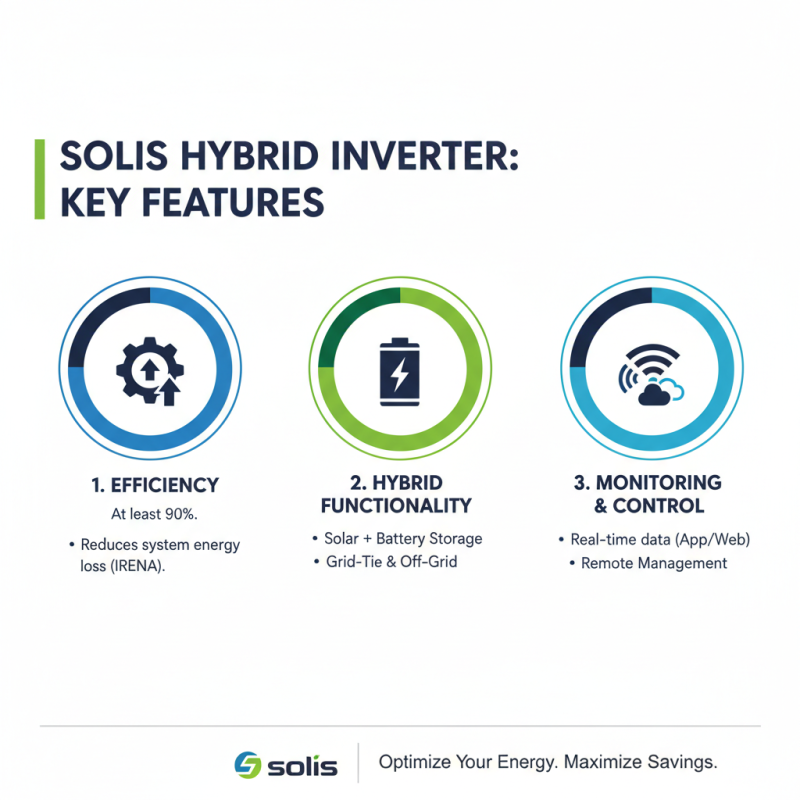
When selecting a hybrid inverter, key features are crucial for meeting energy needs effectively. Efficiency is paramount; look for inverters with at least 90% efficiency ratings. Many industry studies highlight that higher efficiency translates to better energy savings. A report by the International Renewable Energy Agency notes that inverters account for 10-20% of overall system loss, making this a vital consideration.
Battery management systems are another essential aspect. Advanced models support various battery types, providing flexibility. According to market analysis, systems with robust battery management extend the lifespan of batteries. Features like state-of-charge indicators and temperature control can enhance performance. It’s important to assess the inverter's compatibility with your chosen battery solution.
Monitoring capabilities play a significant role in inverter selection. Real-time data tracking allows users to optimize energy consumption. A survey by EnergySage indicates that systems with extensive monitoring options see a 15% decrease in energy wastage. Indeed, while many inverters offer these features, their complexity can often be a source of frustration and requires installer expertise. Balancing these technological advancements with user-friendliness is not always straightforward.
Comparing Solis Hybrid Inverters: Efficiency and Performance Metrics
When choosing a hybrid inverter, efficiency and performance metrics are critical. These metrics determine how well the inverter converts energy. A higher efficiency rating means more usable energy. However, what does that really mean for everyday use?
A well-performing hybrid inverter should seamlessly integrate solar power with grid energy. Look for models that offer real-time monitoring. This feature allows users to track energy flow and consumption. Adjustments can often be made through a mobile app, enhancing energy management at home. However, be cautious of relying entirely on technology. Sometimes, failures in software or connectivity can hinder performance.
Inverters with good performance metrics typically have lower Total Harmonic Distortion (THD) levels. This aspect minimizes energy wastage and protects sensitive appliances. Evaluating these specifications can get complex. Rely on trusted resources or expert reviews for clarity. Not every high-rated inverter will meet individual energy needs. Carefully consider your unique situation before making a decision.
Comparison of Solis Hybrid Inverters: Efficiency and Performance Metrics
Installation and Maintenance Tips for Solis Hybrid Inverters
When installing Solis hybrid inverters, ensuring proper placement is crucial. Position the inverter in a well-ventilated and shaded area. This helps prevent overheating and maintains optimal efficiency. According to the Solar Energy Industries Association, improper installation can reduce inverter efficiency by up to 20%. Regular checks on ventilation clearance can mitigate this issue.
Maintenance is often overlooked but essential for longevity. Cleaning the inverter and its surroundings at least twice a year can enhance performance. Dust and debris can impede airflow, leading to overheating. Reports show that regular maintenance can increase the lifespan of the inverter by 5 to 10 years. Additionally, monitoring the energy output monthly ensures that any unusual drops are addressed promptly.
Consideration for wiring is often underestimated. Use high-quality cables to minimize energy loss. A professional can assess your wiring and make necessary upgrades. Industry standards suggest that even minor wiring improvements can boost system efficiency significantly. Reflect on your setup and be open to adjustments. Proper attention to installation and maintenance can lead to a more reliable energy system.
Cost Analysis: Budgeting for Your Solis Hybrid Inverter Purchase
When budgeting for a Solis hybrid inverter, it's crucial to assess both upfront costs and long-term savings. On average, the initial investment for a hybrid inverter can range from $1,500 to $5,000, depending on the system's capacity and features. Consider exploring various financing options or incentives, such as government rebates, which can significantly reduce your out-of-pocket costs. In 2023, data from the Solar Energy Industries Association indicates that homeowners can save approximately $20,000 over 20 years by investing in solar technology, including hybrid inverters.
It's also essential to analyze the total cost of ownership. Beyond purchase price, factors like installation fees, maintenance costs, and energy savings play a role. Installation can range from $1,000 to $3,000. Regular maintenance is generally low, averaging $200 to $500 annually. Energy savings can vary based on local utility rates, but averaging savings of 40% on monthly electricity bills could amount to significant annual savings. Reviewing these details helps to make an informed decision.
Lastly, reflecting on personal energy needs is critical. Some users may find that a basic inverter suffices, leading to unnecessary expenses. While features like battery storage enhance energy independence, they also increase upfront costs. Balancing your budget with your energy usage goals is vital for a satisfactory investment in a hybrid inverter.