Leave Your Message

2026 Best 3kW Hybrid Inverter for Global Buyers?

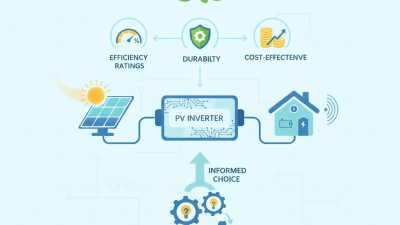
Choosing the 2026 best 3kw Hybrid Inverter requires more than comparing headline efficiency. Global buyers must examine real operating conditions, local grid rules, battery compatibility, and service support. A compact inverter may power lights, refrigeration, networking equipment, and selected household circuits. It may not support heavy heating loads or several motor-driven appliances together. That limitation matters.

Dr. Jan Kleissl, a respected solar energy researcher, states, “Solar energy is the most abundant energy resource on Earth.” His observation also highlights a practical challenge: usable energy depends on conversion, storage, and timing. A strong 3kw Hybrid Inverter should therefore offer stable MPPT performance, clear battery settings, and reliable transfer during outages. Check whether it supports lithium iron phosphate batteries, generator input, export control, and remote monitoring. Confirm the voltage range before ordering.

Conditions vary sharply across markets. Dusty rooftops demand careful installation and ventilation. Tropical regions need suitable humidity protection. Cold climates can reduce battery performance. Certification also matters, including grid-specific requirements and approved communication protocols. Warranty length sounds impressive, but local repair capability may matter more.

No model is perfect. Some efficient units have limited software. Some affordable units provide weak technical support. Buyers should compare test data, not promotional claims. A sensible decision balances efficiency, safety, noise, battery flexibility, and long-term service. That balance may be less exciting than a record specification, but it usually protects the investment.
2026 Best 3kW Hybrid Inverter for Global Buyers?

What Is a 3kW Hybrid Inverter and How Does It Work?

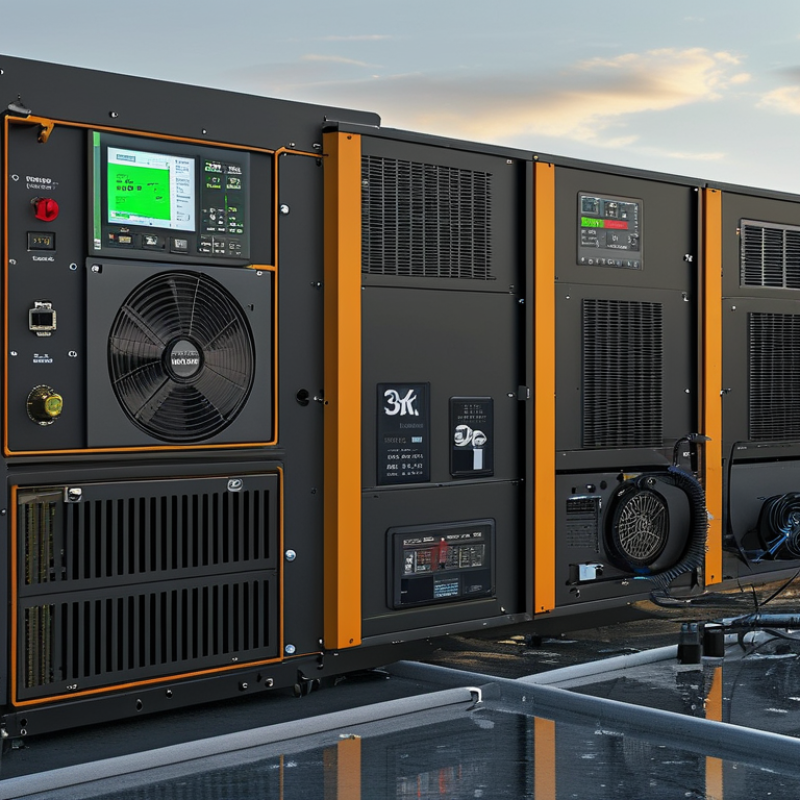
A 3kW hybrid inverter combines solar conversion, battery control, and grid interaction in one unit. It changes direct-current electricity from panels into household alternating current. It can also charge a battery when solar production exceeds demand. During outages, it supplies selected circuits through a backup output. The 3kW rating describes maximum continuous power, not battery capacity. A kettle, refrigerator, and pump may exceed it together.

Its internal controller constantly compares solar generation, household demand, battery status, and grid conditions. Power may flow from panels to appliances, then to the battery, or back to the grid. Some systems support grid charging, time-of-use scheduling, and generator input. Performance depends on temperature, cable losses, battery voltage, and local connection rules. The label can mislead. A 3kW unit may handle short surges, but not every motor startup reliably. IEA’s Renewables 2024 report expects global renewable capacity to grow by 5,500GW during 2024–2030, with solar providing nearly 80% of additions. IRENA recorded 1,865GW of global solar capacity by the end of 2024.

Tips: Match continuous and surge ratings with real appliances. Check battery voltage, backup limits, MPPT range, and certified protection requirements. Leave expansion space. A practical design may use 2kW today but need 3kW later. That possibility deserves honest planning.

2026 Best 3kW Hybrid Inverter for Global Buyers

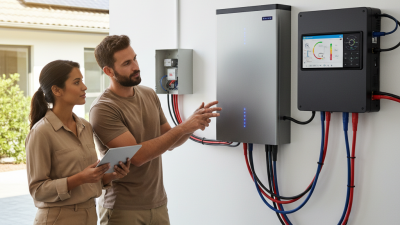
A 3kW hybrid inverter can convert energy between solar panels, batteries, and household AC loads. The chart shows the ideal current required at common AC output and battery voltage levels when delivering a continuous 3,000W load. Actual current is usually higher because of conversion losses.

Calculation: Current = Power ÷ Voltage. At 3,000W, a 120V AC output requires 25A, while a 230V AC output requires approximately 13.0A. On the battery side, a 48V system requires approximately 62.5A before efficiency losses.

Which Technical Specifications Matter for Global Buyers?

2026 Best 3kW Hybrid Inverter for Global Buyers?

A 3kW hybrid inverter should match the site, not merely advertise high efficiency. IRENA’s Renewable Capacity Statistics 2025 recorded 452 GW of new solar capacity in 2024. That growth increases demand for equipment that works across different climates and grids. Check input voltage, maximum PV current, MPPT range, and battery voltage carefully. A wide MPPT range helps when two roof faces receive uneven sunlight. It matters in real installations.

Efficiency is only one part of the decision. The IEA’s Electricity 2025 report expects electricity demand to keep rising through 2027, partly because of cooling and electrification. Buyers should examine peak-load handling, surge capacity, and transfer time. A refrigerator may start with a sharp current spike. A 3kW label does not explain that moment. Battery compatibility also matters, including lithium protection communication, charging limits, and low-temperature behavior. IP65 protection, corrosion resistance, and an operating range near -20°C to 50°C are useful for varied climates. Not every datasheet explains derating clearly.

Grid frequency, voltage, and local certification cannot be treated as small details. Look for documented compliance with the destination grid code and recognized safety standards, such as IEC 62109 and IEC 62477-1, where applicable. Remote monitoring should record alarms, energy flow, and battery state without requiring constant internet access. Field experience suggests that installation manuals often matter as much as hardware. I would still question impressive efficiency claims measured under ideal conditions. Real roofs are messier.

How to Compare Battery, Solar, and Grid Compatibility

2026 Best 3kW Hybrid Inverter for Global Buyers?

Start with the battery. A 3kW inverter may support lithium batteries, lead-acid batteries, or both, but voltage ranges can differ sharply. Check the battery’s nominal voltage, maximum charging current, discharge limit, and communication method. A battery rated at 5kWh may provide less usable energy after reserve settings and conversion losses. Check the numbers.

Solar compatibility depends on more than maximum wattage. Compare the inverter’s MPPT voltage range, maximum PV current, and startup voltage with the planned panel layout. In field reviews, mismatched string voltage often causes weak morning production. Shading also matters. Two independent MPPT inputs can perform better when roof sections face different directions. A 3kW unit may accept extra solar capacity, but confirm its clipping behavior and warranty conditions.

Grid compatibility requires careful local verification. Confirm voltage, frequency, phase type, export control, transfer time, and certified anti-islanding protection. A model designed for one market may not satisfy another grid connection rule. Backup outlets may also have separate power limits, especially during motor startup. Real sites differ. I have seen installations pass basic load tests but struggle with pumps and refrigerators. A practical comparison should include cold-weather charging, overload duration, monitoring quality, service access, and documented safety certifications. The cheapest specification sheet is not always the safest choice.

2026 Best 3kW Hybrid Inverter for Global Buyers? — How to Compare Battery, Solar, and Grid Compatibility
Comparison Dimension Low-Voltage 48V Configuration High-Voltage Battery Configuration Single-Phase Global Configuration Split-Phase Configuration What Buyers Should Verify
Typical Continuous AC Output 3,000 W 3,000 W 3,000 W at 220–240 V 3,000 W total; often 120/240 V split phase Confirm whether the rating is continuous, surge, or limited by battery temperature.
Battery Voltage 40–60 V nominal; commonly called a 48 V system Approximately 80–500 V DC, depending on the battery design Usually 40–60 V or high-voltage, depending on the model Usually 40–60 V or high-voltage, depending on the model Match the inverter's usable voltage window to the battery's operating and shutdown limits.
Approximate Battery Current at Full Output About 63–75 A at 48 V, allowing for conversion losses About 7–40 A, depending on the battery voltage Depends on the selected battery architecture Depends on the selected battery architecture Check the inverter's maximum charge/discharge current and the battery BMS current limit.
Recommended Battery Energy Approximately 5–15 kWh for normal residential use Approximately 5–15 kWh for normal residential use Size according to desired backup duration and daily load Size according to desired backup duration and daily load Battery capacity does not determine output power; the BMS and inverter current ratings do.
Maximum PV Input Power Commonly 3,000–4,500 W, but model-specific Commonly 3,000–5,000 W, but model-specific Commonly 3,000–5,000 W, subject to local rules Commonly 3,000–5,000 W, subject to local rules Do not exceed the listed maximum PV power, voltage, current, or short-circuit current.
MPPT Voltage Range Often about 90–450 V DC Often about 90–450 V DC Often about 90–450 V DC Often about 90–450 V DC Check the cold-weather open-circuit voltage of the proposed PV string.
MPPT Inputs Usually 1–2 independent trackers Usually 1–2 independent trackers Usually 1–2 independent trackers Usually 1–2 independent trackers Multiple MPPTs are useful when roof orientations or shading conditions differ.
Grid Voltage Compatibility Typically 220–240 V single phase Typically 220–240 V single phase Commonly 220–240 V single phase Commonly 120/240 V or 230/240 V, depending on the market Grid frequency, voltage, neutral arrangement, and certification must match the installation country.
Grid Frequency 50 or 60 Hz versions are available 50 or 60 Hz versions are available 50 or 60 Hz versions are available 50 or 60 Hz versions are available Some units support both frequencies; others require a dedicated regional model.
Backup / EPS Output Usually available; commonly 3,000 W continuous Usually available; commonly 3,000 W continuous Usually available; transfer time commonly 10–20 ms Available only when the unit supports split-phase backup Verify peak power, motor-start capability, transfer time, and whether the neutral is switched.
Motor and Compressor Starting Often 2–3 times rated power for a short period Often 2–3 times rated power for a short period Model-dependent; a 3 kW label does not guarantee large surge capacity Model-dependent; loads may need to be balanced across both legs Compare the specified surge duration and current, not only the headline wattage.
Peak Conversion Efficiency Typically about 94–98% Typically about 95–98% Typically about 94–98% Typically about 94–98% Use weighted or European efficiency when comparing annual energy yield.
Battery Chemistry Support Lead-acid and lithium-ion are commonly supported Usually lithium-ion batteries designed for high-voltage operation Lead-acid and lithium-ion support varies by model Lead-acid and lithium-ion support varies by model Confirm charge voltage, temperature compensation, battery profiles, and approved BMS communication.
Battery Communication CAN, RS485, or voltage-based control are common CAN or RS485 communication is commonly required CAN, RS485, or voltage-based control may be available CAN, RS485, or voltage-based control may be available Check connector pinout, communication protocol, termination, and firmware compatibility.
Parallel Operation Common on many residential units Available on selected systems only Common on selected models Must support synchronized split-phase operation Verify the maximum number of parallel units and whether an additional communication kit is required.
Ingress Protection Indoor and outdoor versions range from IP20 to IP65 Indoor and outdoor versions range from IP20 to IP65 Common outdoor models are often IP65-rated Common outdoor models are often IP65-rated IP rating does not replace protection from direct rain, flooding, salt mist, or extreme heat.
Operating Temperature Commonly about -25°C to +60°C with derating above 40°C Commonly about -25°C to +60°C with derating above 40°C Commonly about -25°C to +60°C with derating above 40°C Commonly about -25°C to +60°C with derating above 40°C Review the power-derating curve for the actual installation temperature.
Best Use Case Cost-sensitive homes, cabins, small commercial systems, and widely available 48 V batteries Longer cable runs, lower battery current, and higher-voltage storage systems Homes with standard single-phase service and 220–240 V loads Homes requiring 120/240 V loads or split-phase backup
Main Selection Risk High DC current can require thicker cables, larger fuses, and careful thermal design Battery safety, installation rules, and service procedures are more demanding A single-phase unit may not support local three-phase or split-phase requirements Incorrect phase synchronization can prevent backup operation or damage equipment
Overall Buying Priority Choose when battery availability, serviceability, and lower system cost are most important. Choose when efficiency, lower current, and a compatible high-voltage battery ecosystem are priorities. Choose when the local grid is single phase and the system will serve conventional household loads. Choose only when the inverter explicitly supports the required split-phase voltage and backup arrangement.
Technical values are representative market ranges for 3 kW hybrid inverter architectures, not guaranteed specifications for a particular model. Always confirm the current product datasheet, local grid code, battery certification, PV string design, protection requirements, and installer regulations before purchase or installation.

What Safety, Certification, and Installation Standards Apply?

The best 2026 3kW hybrid inverter depends on local safety and grid requirements. Global buyers should verify compliance before comparing efficiency or battery features. A 3kW unit can still produce dangerous DC voltage and high fault currents. Small does not mean harmless.

The core safety references include IEC 62109 and IEC 62477, covering power conversion equipment and electrical hazards. EMC testing under the IEC 61000 series also matters in residential environments. Look for protection against overvoltage, overheating, reverse polarity, and unintentional islanding. Ask for test reports from an accredited laboratory, not only a sales certificate. Certification should match the exact model and firmware version. Paperwork can mislead.

Installation rules change by location. North American projects may require UL 1741-based evaluation and NEC-compliant wiring. Australia commonly applies AS/NZS 5033 for photovoltaic installations. European systems may require IEC 60364 practices and national grid codes, such as VDE-AR-N 4105. The installer must confirm earthing, cable size, isolation switches, battery spacing, ventilation, and fault-current protection. Leave clear access around the inverter. Do not copy a diagram from another country.

A practical inspection should record torque settings, insulation resistance, and shutdown behavior. Documentation is often incomplete. That gap deserves attention. The safest purchase is not always the cheapest or most efficient model; it is the one that fits the local approval pathway and can be installed correctly.

How to Choose the Best 3kW Hybrid Inverter for Different Markets?

2026 Best 3kW Hybrid Inverter for Global Buyers?

How to Choose the Best 3kW Hybrid Inverter for Different Markets?

Choosing a 3kW hybrid inverter starts with the local power system. Check voltage, frequency, phase type, and approved grid settings. A unit for a 230V market may not suit a 120/240V split-phase installation. Confirm local certification before comparing prices. This step prevents costly replacement work.

Battery compatibility also matters. Match the inverter with the battery’s voltage range, communication method, and charging limits. Lithium batteries need accurate protection and monitoring. Lead-acid systems require different charging profiles. Look for stable MPPT performance when roof panels face different directions. A wider input range can help in cloudy regions.

Climate changes the decision. In hot areas, strong thermal control protects output during long afternoon loads. In humid or dusty locations, inspect the enclosure rating and installation guidance. Weak grids need reliable backup transfer and clear overload behavior. Some markets also require export control or anti-islanding functions. Confirm these details with a qualified local installer.

Do not trust efficiency figures alone. They may reflect ideal laboratory conditions. A slightly lower rating can perform better in heat, dust, or unstable grids. My own selection process has changed after seeing poor cable sizing reduce real output. Warranty support, spare parts, remote monitoring, and installer training deserve equal attention. A perfect checklist does not exist. Local service may matter more than one impressive specification.