Leave Your Message

2026 Best 10kW Hybrid Inverter for Global Buyers?

Choosing the 2026 Best Hybrid Inverter 10kw requires more than comparing rated output or display features. Global buyers face different grid voltages, battery standards, climates, and installation rules. A unit that performs smoothly in Germany may need different settings for South Africa, Australia, or Southeast Asia.

Paul Denholm, an energy-storage researcher at the National Renewable Energy Laboratory, offers a useful principle: “Storage value depends on when and where it operates.” This idea matters when evaluating a Hybrid Inverter 10kw. The best model should manage solar production, battery charging, household loads, and grid interaction without unnecessary energy losses. It should also respond quickly when clouds cover the panels or the grid fails.

Practical details reveal more than marketing language. Check the battery voltage range, maximum PV input, MPPT operating window, surge capacity, and backup switching time. Confirm local certifications before purchase. An IP65 enclosure can help in dusty outdoor locations, but it does not replace correct installation. Cooling fans, connector quality, and mobile-app reliability also deserve attention.

No model wins everywhere. That is the uncomfortable part. Some buyers may prefer higher efficiency, while others need stronger backup performance or easier service access. Warranty length matters, but local technical support matters more. A brilliant specification sheet can become frustrating without spare parts or trained installers.

This guide compares ten leading options for 2026. It considers real operating conditions, not only laboratory figures. Performance can still vary with battery chemistry, rooftop design, temperature, and user habits. Buyers should verify every specification with the manufacturer before committing.

2026 Best 10kW Hybrid Inverter for Global Buyers?

What Is a 10kW Hybrid Inverter and How Does It Work?

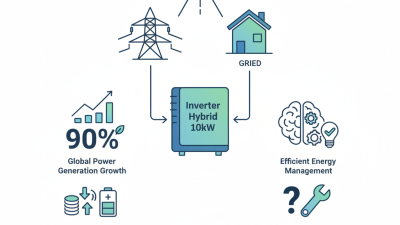
A 10kW hybrid inverter converts solar DC electricity into usable AC power for homes, workshops, or small commercial sites. Its 10kW rating usually describes continuous AC output, not guaranteed solar production. The unit can connect photovoltaic panels, batteries, the utility grid, and backup loads. Its control system decides where energy goes.

During sunny hours, MPPT trackers adjust panel voltage for better harvest. Solar power serves appliances first, charges the battery second, and exports surplus power when regulations allow. At night, stored DC energy passes through the inverter and powers selected circuits. If the grid fails, an internal transfer function isolates the backup output. It must switch quickly, but not every model supports whole-home backup.

The IEA’s Renewables 2024 report expects global renewable capacity to expand by nearly 5,500 GW between 2024 and 2030, with solar providing about 80% of additions. That growth increases demand for flexible storage and power conversion. NREL’s 2024 Annual Technology Baseline places lithium-ion battery round-trip efficiency near 85% for many storage applications. Real results vary with temperature, battery age, cable losses, and standby consumption.

A practical installation needs load measurements, not guesses. A 2kW pump can briefly demand much more during startup. Battery capacity also matters: a 10kW inverter may run a 5kW load for two hours only with roughly 10kWh usable storage, before losses. That estimate is imperfect. Installer checks, local grid rules, phase requirements, and protection settings still decide whether the system performs safely.

Key Specifications for Comparing 10kW Hybrid Inverters

A 10kW hybrid inverter should be compared through measurable specifications, not headline power alone. Check its continuous output, surge capacity, and overload duration. Motors and pumps may need two or three times their running power briefly. Battery voltage also matters. Low-voltage systems usually require higher current, larger cables, and stronger protection. High-voltage designs can reduce cable losses, but installation requirements may become more demanding.

Tips: Confirm the usable MPPT voltage range, maximum PV input current, and total solar input power. A wide MPPT range helps when roof strings face different directions. Check peak efficiency, standby consumption, cooling design, and noise levels. For outdoor installation, review the IP rating and operating temperature. Grid compatibility is equally important. Frequency, voltage, anti-islanding protection, transfer time, and local certification can differ between countries.

A practical comparison should examine the battery charge and discharge limits, communication ports, monitoring options, and backup-load behavior. Do not assume a 10kW label means 10kW is available in every mode. Some units reduce output in high temperatures or when the battery is nearly empty. That detail is easy to miss. A spreadsheet may look complete, yet cable length, shading, and seasonal sunlight can change the result. Ask for test conditions, not only peak efficiency figures. Warranty terms and service response also deserve careful attention, especially for remote installations.

2026 Best 10kW Hybrid Inverter for Global Buyers? – Key Specifications for Comparing 10kW Hybrid Inverters

A practical, brand-neutral specification guide for evaluating 10kW-class hybrid inverters in residential, small commercial, and light industrial applications.

Specification Typical 10kW-Class Range Preferred Benchmark for Global Buyers Why It Matters When Comparing Models
Rated Continuous AC Output 10 kW nominal output 10 kW continuous output at the specified ambient temperature Confirms the usable power available for household, commercial, or backup loads. Check whether the rating applies at 25°C only or across the full operating temperature range.
AC System Configuration Single-phase or three-phase Select according to local grid requirements; three-phase models should provide balanced phase management Grid voltage and phase configuration differ by country. A single-phase inverter is not a direct substitute for a three-phase grid connection.
Surge and Motor-Starting Capacity Approximately 15–20 kVA for short periods, depending on design At least 2× rated power for several seconds when backup loads include pumps, compressors, or refrigeration High starting currents can cause nuisance shutdowns even when the average load is below 10 kW. Verify the duration and waveform of the published surge rating.
Maximum PV Array Power Approximately 12–15 kWp At least 12 kWp when increased morning, evening, or winter energy harvest is important PV oversizing can improve daily energy yield because the array reaches useful output earlier and maintains production later in the day. Confirm that local regulations permit the proposed array size.
Maximum PV Input Voltage Typically 500–1,000 V DC A voltage limit suitable for the intended module string while remaining below the cold-weather open-circuit voltage The maximum string voltage rises in cold conditions. String design must account for the lowest expected temperature, not only standard test conditions.
MPPT Trackers Two or more independent MPPTs At least 2 MPPTs with a broad operating voltage range Separate trackers help manage different roof orientations, partial shading, and unequal string lengths without forcing all arrays to operate at the same voltage.
Maximum PV Input Current Commonly 16–30 A per MPPT Current capacity compatible with modern high-current solar modules, with independent MPPT protection Modules with high operating current may be clipped if the inverter input limit is too low. Compare both the operating-current and short-circuit-current limits.
Maximum Conversion Efficiency Approximately 97%–99% At least 98% maximum efficiency, with a published European or weighted efficiency value Maximum efficiency is achieved under specific conditions. Weighted efficiency gives a more useful indication of performance across different load levels.
Battery Voltage Architecture Low-voltage systems around 40–60 V DC or high-voltage systems commonly above 100 V DC Choose a voltage class compatible with the selected battery and required charging current For the same 10 kW output, a lower-voltage battery system requires substantially higher current. Compatibility must include battery voltage, communication protocol, and protection limits.
Battery Charge and Discharge Power Approximately 5–10 kW, depending on battery voltage and model Around 10 kW where full-load backup and rapid energy shifting are required Rated inverter power does not always equal rated battery power. A lower battery power rating may limit backup output or reduce the speed of solar energy storage.
Battery Compatibility Approved lithium-ion battery systems; some models also support other chemistries Documented compatibility with lithium iron phosphate batteries and closed-loop BMS communication Closed-loop communication enables the battery management system to control charging, discharging, temperature limits, and state-of-charge protection.
Backup Switching Time Typically 10–20 ms for UPS-style systems; longer for some backup outputs ≤20 ms for sensitive residential or small-office equipment, subject to local wiring and load conditions A short transfer time helps prevent interruption of computers, networking equipment, and control systems. It does not necessarily replace a certified online UPS.
Backup Output Capability Dedicated backup output, sometimes with load prioritization Full-rated backup output with configurable essential-load management Some systems provide backup only through a limited-load port. Confirm whether the full 10 kW rating is available during grid outages and whether phase imbalance is permitted.
Grid and Generator Integration Grid connection; generator support varies by model Configurable generator input with current limits, dry-contact control, and anti-islanding protection Generator compatibility is useful in weak-grid or off-grid applications. Verify neutral bonding, frequency range, synchronization behavior, and local electrical requirements.
Protection Functions Anti-islanding, overvoltage, overcurrent, short-circuit, overtemperature, and reverse-polarity protection Integrated DC and AC surge protection, insulation monitoring, residual-current monitoring, and battery fault protection Protection features reduce equipment and fire risks, but external disconnects, fuses, breakers, and surge protection may still be required by local codes.
Ingress Protection Usually IP65 or higher for outdoor-rated units IP65 or IP66 enclosure with corrosion-resistant housing and suitable cable glands Ingress protection indicates resistance to dust and water under defined test conditions. It does not remove the need for shade, ventilation, and correct installation.
Operating Temperature Commonly –25°C to +60°C, with power derating at high temperature At least –25°C to +50°C at full output, with a clearly published derating curve High ambient temperatures can reduce the available output. Installation location and ventilation should be assessed using the manufacturer’s derating data.
Communication Interfaces Wi-Fi, Ethernet, RS485, CAN, and digital inputs vary by model Ethernet or cellular monitoring plus RS485/CAN for battery and energy-meter communication Reliable wired communication is valuable in areas with weak wireless coverage. Confirm whether monitoring functions require a subscription or cloud connection.
Energy Management Functions Self-consumption, time-of-use charging, export limitation, and backup reserve Adjustable battery reserve, zero-export control, peak shaving, and time-of-use scheduling Advanced energy management can increase savings and reduce grid dependence, but these functions may require a compatible meter and country-specific configuration.
Safety and Grid Compliance Compliance varies by target market Relevant IEC safety and EMC compliance plus applicable national grid-code certification Look for documented test reports and certificates applicable to the installation country. A general CE mark alone may not satisfy local grid-connection requirements.
Warranty and Serviceability Commonly 5 years, with optional extension programs At least 5 years with clear conditions, accessible technical support, spare parts, and firmware procedures Warranty length should be assessed together with exclusions, shipping responsibility, response time, installer requirements, and the availability of replacement components.

Important: Specifications for 10kW hybrid inverters vary by topology, phase configuration, battery voltage, operating temperature, and target market. Always verify the official datasheet, installation manual, local grid code, battery compatibility list, and required external protection before purchase or installation.

Battery, Solar, and Grid Compatibility for Global Applications

A 10kW hybrid inverter must balance battery, solar, and grid compatibility across different markets. IRENA’s Renewable Capacity Statistics 2025 recorded 585GW of renewable capacity added worldwide in 2024. Solar represented the largest share, increasing pressure on inverters to manage variable generation and export limits.

For global buyers, check battery voltage, chemistry support, and communication protocols before comparing efficiency. Lithium batteries commonly require CAN or RS485 communication, while backup systems may need precise charging limits.

Solar input also matters. Confirm MPPT voltage, maximum current, and the number of independent trackers.

Grid settings must match local voltage, frequency, phase design, and certification rules. A 230V single-phase system cannot simply replace a 120/240V split-phase system.

IEA’s Renewables 2024 report expects renewable capacity to expand by about 5,500GW through 2030, with solar and wind providing most growth.

Yet, a universal inverter remains mostly a marketing idea. Field conditions are less tidy.

Tips:

Request a compatibility list, not only a product brochure. Test low-voltage battery protection, generator input, islanding control, and remote monitoring. Check whether firmware supports local grid codes. The cheapest unit may create expensive integration work. A practical review should include cold starts, cloudy-day charging, and sudden load changes. No inverter fits every grid.

Safety, Efficiency, Installation, and Certification Requirements

For global buyers, the best 10kW hybrid inverter in 2026 is not simply the model with the highest efficiency figure. It must manage solar input, battery charging, backup loads, and grid interaction without unsafe surprises. Look for verified anti-islanding protection, overcurrent control, surge protection, temperature monitoring, and clear fault records. A quiet enclosure matters too. In a hot plant room, poor ventilation can reduce output before noon.

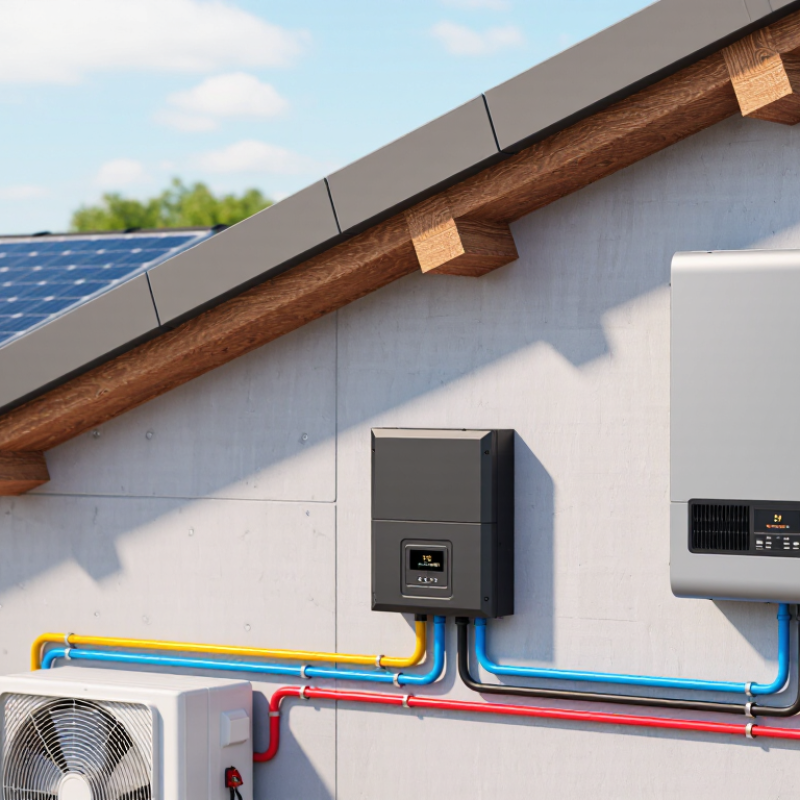
Installation quality often decides real performance. Confirm the battery voltage range before ordering. Check cable sizes, breaker ratings, grounding points, and clearance around heat vents. A qualified installer should test polarity, insulation resistance, backup transfer time, and shutdown behavior. The wall should carry the unit securely, not just appear suitable. I have seen neat installations fail because battery cables were too long. That detail is easy to miss.

Certification must match the destination market. Request current test reports covering electrical safety and electromagnetic compatibility. Depending on the country, buyers may need compliance with IEC 62109, IEC 62477-1, IEC 62116, or national grid codes. Certification marks alone are not enough; verify the certificate holder, scope, and product revision. Efficiency should be checked at realistic loads, not only at a perfect rating point. A 98% claim may fall during low-load nighttime operation. That is where careful comparison becomes necessary.

2026 Best 10kW Hybrid Inverter for Global Buyers

Core safety, efficiency, installation, and certification checkpoints

A suitable 10kW hybrid inverter should pass the applicable safety and grid-interconnection evaluations before deployment. IEC 62109-1 and IEC 62109-2 address power-converter safety, IEC 62116 covers anti-islanding testing, IEC 61727 addresses utility-interface characteristics, and IEC 60529 defines enclosure ingress-protection ratings. Buyers should also verify local grid rules, PV and battery voltage limits, protection devices, installer qualifications, and documented efficiency figures. Certification requirements vary by country and grid operator.

How to Choose the Best 10kW Hybrid Inverter for Your Market

How to Choose the Best 10kW Hybrid Inverter for Your Market

A 10kW hybrid inverter is not automatically suitable for every country. Start with the local grid design: single-phase or three-phase, nominal voltage, frequency, and permitted export limits. A unit designed for one market may perform poorly in another. Confirm the required safety certifications and grid-connection documents before comparing prices.

Battery compatibility deserves equal attention. Check supported battery voltage, communication protocols, usable capacity, and charging current. Lithium batteries may need approved communication settings, not only matching voltage. In hot regions, review derating curves and ventilation requirements. In coastal areas, stronger enclosure protection can prevent corrosion. Small details matter. They often become expensive later.

During field evaluations, I also inspect monitoring quality, backup switching time, installer training, and spare-part access. A clear app is useful, but reliable local support matters more during a nighttime fault. Ask for independent test data, warranty conditions, and service response times. Do not trust impressive peak-efficiency numbers alone; partial-load performance may better reflect a typical home or small business. I once focused too heavily on maximum output and overlooked battery communication limits. That mistake changed the selection process. The best model is the one that matches local conditions, installer capability, and the buyer’s daily energy profile—not simply the one with the longest feature list.